












 Sets New Benchmarks in Global Cosmetic Education and Women Empowerment](https://worldnow.co.in/wp-content/uploads/2026/05/FB_IMG_1779691614478-360x180.jpg)



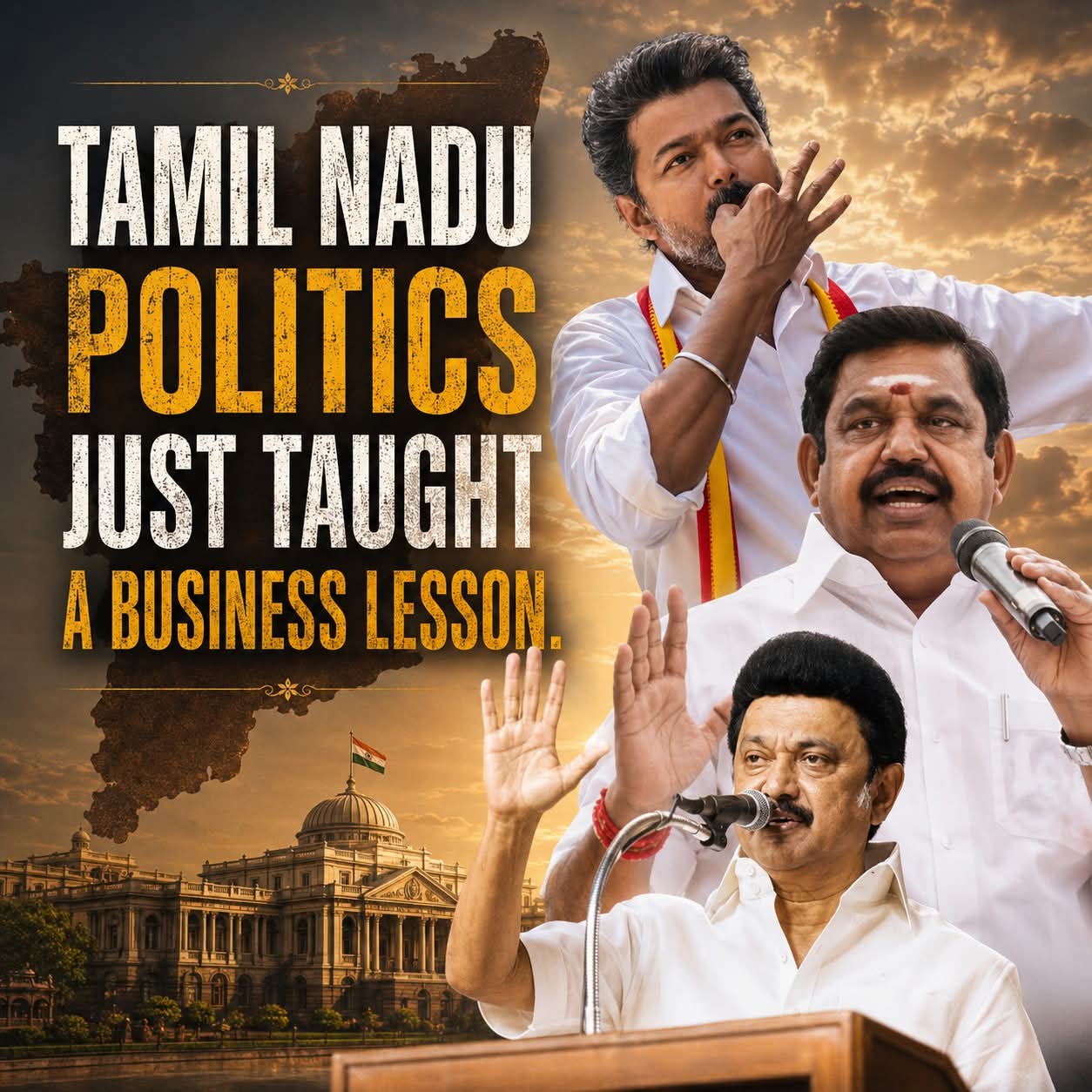
Leadership Defines the Future: Why Tamil Nadu’s Political Mood Mirrors Modern Entrepreneurship
Across Tamil Nadu today, one message is becoming impossible to ignore — people are demanding change. Conversations in tea shops, colleges, corporate offices, and social media platforms all point toward the same expectation: strong leadership, clear direction, and decisive governance.
The growing political mood in the state reflects a deeper reality that extends far beyond politics. It also mirrors the challenges faced by modern entrepreneurs and business leaders.
People Want Leadership That Creates Confidence
Citizens no longer respond only to promises or emotional speeches. They are increasingly looking for leaders who can provide:
Clear vision
Structured decision-making
Accountability
Long-term direction
Confidence during uncertainty
This demand for leadership is not limited to governance alone. Businesses today face the exact same test.
A company may have innovation, talent, and financial investment. But without systems, discipline, and direction, growth becomes inconsistent. Teams lose focus, operations slow down, and trust begins to weaken.
Politics and Entrepreneurship Share the Same Core Principle
Experts often compare governance with business management because both rely heavily on leadership quality.
In politics:
Strong leadership builds public trust.
Weak administration creates confusion.
In entrepreneurship:
Strategic leadership builds scalable systems.
Poor leadership results in daily survival management.
Whether running a state or a startup, leadership ultimately determines how effectively the entire system functions.
Tamil Nadu’s Current Political Climate Reflects a Bigger Shift
The public discourse in Tamil Nadu indicates that people are no longer satisfied with temporary solutions or symbolic politics. There is increasing expectation for:
Administrative efficiency
Transparency
Faster execution
Clear communication
Vision-driven governance
This changing mindset is also influencing younger entrepreneurs, creators, and professionals who now prioritize structure over chaos and execution over slogans.
Businesses Must Learn from Leadership Trends
Industry observers note that many businesses fail not because of bad ideas, but because of:
Lack of operational systems
Absence of strategic planning
Weak team coordination
Leadership inconsistency
A business that depends entirely on daily improvisation often struggles to scale sustainably.
The larger question every entrepreneur must ask today is: “Is the business running through a system — or merely surviving day to day?”
Conclusion
The conversation happening in Tamil Nadu today is bigger than politics alone. It reflects a universal truth relevant to governments, companies, institutions, and startups alike:
Strong leadership creates movement. Clear systems create progress.
And in both politics and entrepreneurship, the future ultimately belongs to those who can provide direction when people are searching for certainty.
 Sets New Benchmarks in Global Cosmetic Education and Women Empowerment](https://worldnow.co.in/wp-content/uploads/2026/05/FB_IMG_1779691614478-120x86.jpg)