















 Sets New Benchmarks in Global Cosmetic Education and Women Empowerment](https://worldnow.co.in/wp-content/uploads/2026/05/FB_IMG_1779691614478-360x180.jpg)




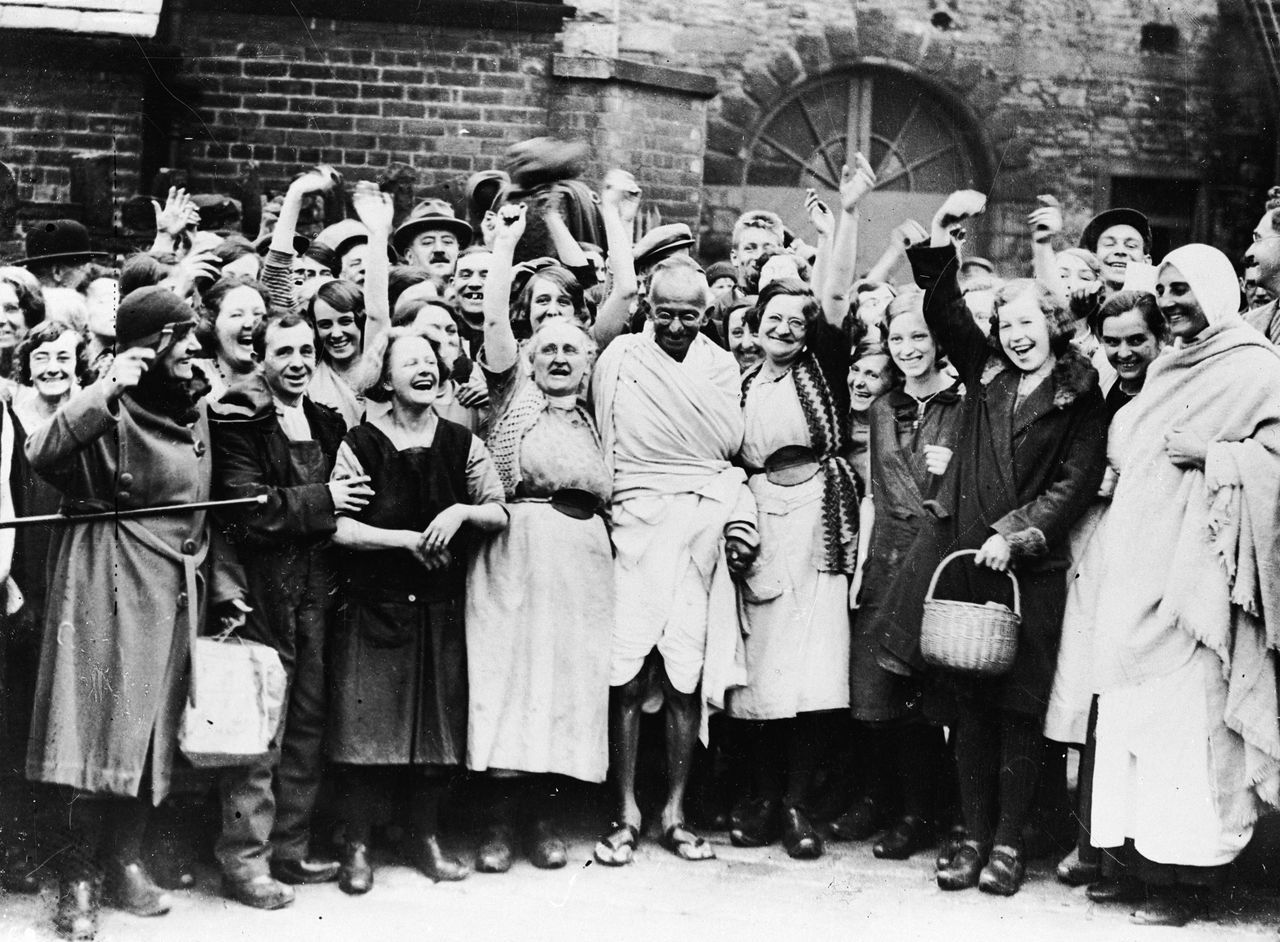
Gandhi on Jesus: A Deep Reverence Beyond Religion
—
Introduction
The relationship between Mahatma Gandhi and Jesus Christ remains one of the most profound interfaith engagements in modern history. Though Gandhi was a devout Hindu, his admiration for the teachings of Jesus—especially the ethical and spiritual principles found in the Sermon on the Mount—shaped his philosophy of nonviolence, truth, and universal love.
This article explores Gandhi’s reflections on Jesus, supported by documented writings, speeches, and historical records.
—
Gandhi’s First Encounter with Jesus’ Teachings
Gandhi’s engagement with Christian thought began during his time in London (1888–1891). Initially skeptical of Christianity, he found himself deeply moved upon reading the New Testament, particularly the Sermon on the Mount.
> “When I read the Sermon on the Mount, I was simply overjoyed.”
— The Collected Works of Mahatma Gandhi
He was especially struck by verses such as:
“Resist not evil”
“Turn the other cheek”
“Love your enemies”
These teachings later became foundational to Gandhi’s doctrine of Ahimsa (nonviolence) and Satyagraha (truth-force).
—
Jesus as a Moral Ideal, Not Institutional Christianity
While Gandhi deeply revered Jesus, he drew a distinction between Christ’s teachings and organized Christianity.
> “I like your Christ, I do not like your Christians. Your Christians are so unlike your Christ.”
— Attributed to Mahatma Gandhi in various missionary accounts
This statement, though debated in exact wording, reflects Gandhi’s consistent criticism of colonial Christianity, which he felt contradicted the humility and compassion of Jesus.
—
The Influence of the Sermon on the Mount
The Sermon on the Mount (Matthew chapters 5–7) had a transformative impact on Gandhi’s philosophy.
Gandhi wrote:
> “The Sermon on the Mount went straight to my heart… it is the essence of Christianity.”
— Young India, 1925
Key parallels between Jesus’ teachings and Gandhi’s philosophy include:
Teachings of Jesus Gandhi’s Adaptation
Love your enemies Nonviolent resistance
Blessed are the meek Strength through humility
Turn the other cheek Moral courage over retaliation
—
Jesus and Nonviolence: A Shared Ethic
Gandhi interpreted Jesus not as a figure of passive suffering, but as a symbol of active, courageous nonviolence.
He stated:
> “If then I had to face only the Sermon on the Mount and my own interpretation of it, I should not hesitate to say, ‘Oh yes, I am a Christian.’”
— The Collected Works of Mahatma Gandhi
For Gandhi, Jesus’ crucifixion was not merely a theological event but a moral demonstration of ultimate sacrifice and resistance without hatred.
—
Dialogue with Christian Thinkers
Gandhi frequently interacted with Christian missionaries and thinkers, including C.F. Andrews, a close associate who helped bridge Hindu-Christian dialogue.
Despite repeated invitations to convert, Gandhi remained rooted in Hinduism, stating:
> “I believe in the fundamental truth of all great religions of the world.”
— Harijan
—
Gandhi’s Universal Christ
Gandhi reinterpreted Jesus beyond the boundaries of Christianity:
He saw Christ as a universal moral teacher
He rejected exclusivist claims that salvation was possible only through Christianity
He embraced Jesus as part of a broader spiritual truth shared across religions
This inclusive view resonated with his belief in Sarva Dharma Samabhava (equal respect for all religions).
—
Critical Perspective: Gandhi and Colonial Christianity
Gandhi’s critique was not of Jesus, but of how Christianity was practiced under colonial rule. He observed contradictions between:
The message of love preached by Jesus
The violence and oppression carried out by colonial powers
This tension led Gandhi to advocate for a return to the original teachings of Christ, stripped of institutional and political distortions.
—
Conclusion
The engagement between Mahatma Gandhi and Jesus Christ represents a powerful example of interfaith dialogue rooted in respect, introspection, and ethical alignment.
Gandhi did not merely study Jesus—he internalized and lived his teachings in a radically transformative way. His life stands as a testament to the enduring relevance of Christ’s message beyond religious boundaries.
 Sets New Benchmarks in Global Cosmetic Education and Women Empowerment](https://worldnow.co.in/wp-content/uploads/2026/05/FB_IMG_1779691614478-350x250.jpg)