














 Sets New Benchmarks in Global Cosmetic Education and Women Empowerment](https://worldnow.co.in/wp-content/uploads/2026/05/FB_IMG_1779691614478-360x180.jpg)




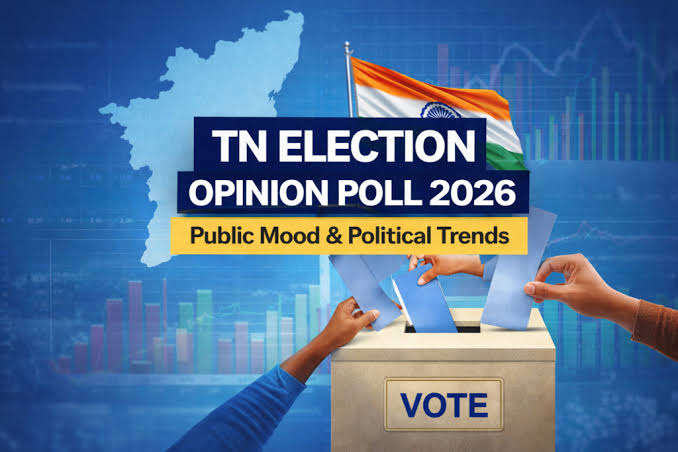
Tamil Nadu 2026: DMK’s Landslide Seat Victory Amid a Fragmented Opposition Vote
Reassessing Vote Share Dynamics under the First-Past-The-Post Electoral System
Chennai | Political Analysis
Based on opinion polling and constituency-level electoral modelling conducted by , a hypothetical yet politically decisive outcome in the 2026 Tamil Nadu Assembly Election points to an extraordinary mandate for the ruling (DMK), with the party projected to secure 180 to 195 seats in the 234-member legislature.
While such a dominant seat tally traditionally signals a near-majority vote share, the emergence of a strong third force— (TVK)—fundamentally reshapes the arithmetic of vote-to-seat conversion under India’s First-Past-The-Post (FPTP) electoral system.
Seat Distribution Scenario
| Party | Seats Won (Estimated) |
|---|---|
| DMK | 180 – 195 |
| AIADMK | 30 – 45 |
| TVK | 1 – 4 |
| NTK | 0 |
| Others | 0 |
| Total | 234 |
Understanding the Paradox: High Seats, Split Votes
Under the FPTP framework, elections reward vote efficiency rather than absolute vote share. When opposition votes are fragmented across multiple parties, a dominant party can convert a plurality of votes into a super-majority of seats.
In this scenario, TVK’s double-digit vote share significantly weakens the opposition vote pool, even as it translates into only a limited number of assembly seats.
Revised Estimated Statewide Vote Share
🔴 (DMK)
- Seats: 180 – 195
- Estimated Vote Share: 42% – 46%
This level of vote share—short of an absolute majority—still enables a historic seat sweep due to:
- Three-cornered electoral contests
- Narrow but widespread constituency victories
- Strong alliance vote consolidation
🟢 (AIADMK)
- Seats: 30 – 45
- Estimated Vote Share: 22% – 26%
AIADMK’s reduced seat count reflects sustained vote erosion and its inability to consolidate the anti-incumbent electorate.
🟡 (TVK)
- Seats: 1 – 4
- Estimated Vote Share: 10% – 16%
TVK emerges as a major vote-share holder but a minor seat-winner, highlighting its role as a decisive vote-splitter rather than a seat-converting force.
🟠 (NTK)
- Seats: 0
- Estimated Vote Share: 3% – 5%
⚪ Others / Independents
- Seats: 0
- Estimated Vote Share: 1% – 2%
Vote Share Summary
| Party | Estimated Vote Share |
|---|---|
| DMK | 42% – 46% |
| AIADMK | 22% – 26% |
| TVK | 10% – 16% |
| NTK | 3% – 5% |
| Others | 1% – 2% |
| Total | ≈100% |
Conclusion
According to polling data and electoral modelling by , the projected 180–195 seat victory for DMK in the 2026 Tamil Nadu Assembly election is mathematically achievable without crossing the 50% vote-share mark, provided the opposition vote remains fragmented.
This scenario underscores a fundamental reality of FPTP democracies: electoral dominance is often shaped more by vote distribution than by absolute popularity. If realised, such a mandate would mark one of the most efficient seat conversions in Tamil Nadu’s modern political history.