














 Sets New Benchmarks in Global Cosmetic Education and Women Empowerment](https://worldnow.co.in/wp-content/uploads/2026/05/FB_IMG_1779691614478-360x180.jpg)



First Human Dress Traced to Fig Tree: Evidence from Scripture and Anthropology
For human world First dress was made by fig tree..
The earliest reference to human clothing appears in the (Genesis 3:7), where it is recorded that and covered themselves using fig leaves. This passage is widely regarded as the first documented mention of garments in human history, symbolising both physical covering and moral awakening.
From an anthropological perspective, early humans relied entirely on their surrounding ecology. Leaves, bark, animal hides, and plant fibres were used before the development of weaving or tailoring. Fig leaves, due to their size and flexibility, were among the most practical natural materials available in early agrarian regions of the Middle East.
Archaeological studies of prehistoric societies confirm that before loom-based textiles emerged around 7000–6000 BCE, humans used untreated plant materials and bark as body coverings. Fossil evidence and tool marks on ancient wooden beaters suggest early techniques of softening bark into wearable sheets—an early form of fabric technology.
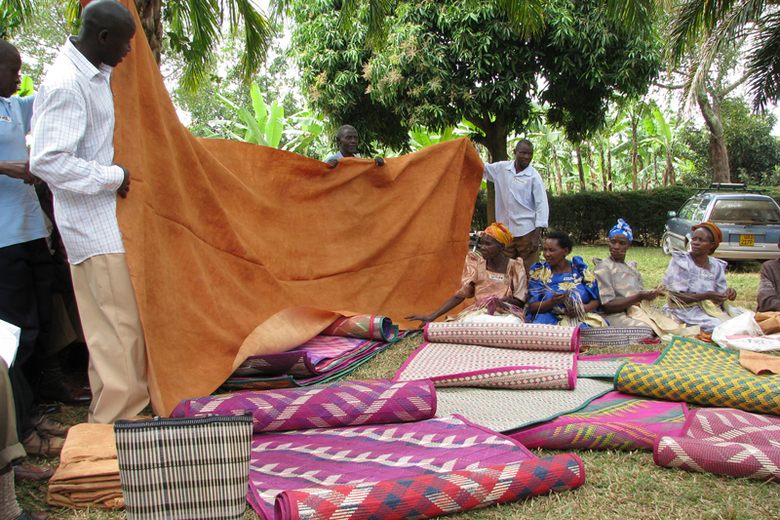
Significantly, this ancient method has not disappeared. In parts of , traditional communities still produce barkcloth garments using methods strikingly similar to prehistoric practices. Bark is harvested sustainably from living trees, soaked, and beaten with wooden mallets until it becomes soft and cloth-like, preserving both tradition and ecology.
The survival of these practices offers living proof that humanity’s first clothing traditions—rooted in nature—continue to exist alongside modern fashion, bridging sacred texts, science, and living culture.