





















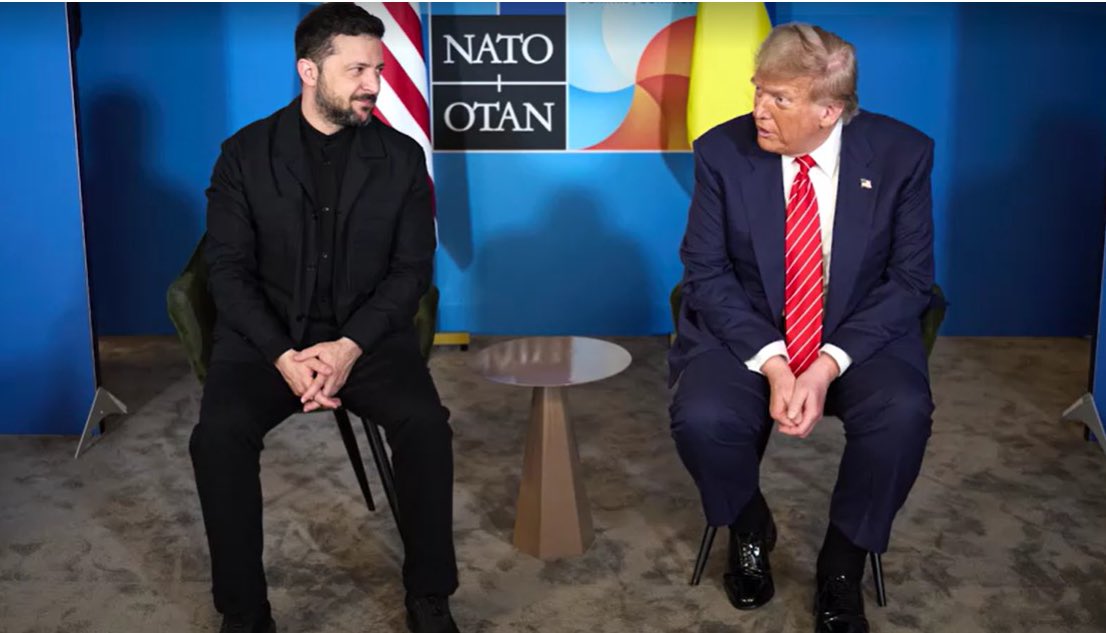
Washington, D.C., August 18, 2025 — U.S. President Donald Trump hosted Ukrainian President Volodymyr Zelensky at the White House on Monday for a critical meeting aimed at addressing the ongoing Russia-Ukraine war. The talks, which included a delegation of prominent European leaders, underscored the complex dynamics of U.S. foreign policy and the urgent need for a resolution to the conflict that has persisted since Russia’s invasion of Ukraine in 2022.
The bilateral meeting between Trump and Zelensky began at 1:15 p.m. EDT in the Oval Office, following Zelensky’s arrival at the White House. The encounter was marked by a tense backdrop, as it followed a contentious February 2025 meeting where Trump and Vice President JD Vance publicly criticized Zelensky, leading to an abrupt end to discussions on a proposed U.S.-Ukraine mineral resources agreement. This time, Zelensky was accompanied by an extraordinary coalition of European leaders, including German Chancellor Friedrich Merz, French President Emmanuel Macron, British Prime Minister Keir Starmer, Italian Prime Minister Giorgia Meloni, Finnish President Alexander Stubb, European Commission President Ursula von der Leyen, and NATO Secretary-General Mark Rutte, signaling a united European front to bolster Ukraine’s position.
According to the White House schedule, Trump and Zelensky held a private meeting before a multilateral session with European leaders at 3:00 p.m. EDT in the East Room. The discussions focused on securing robust security guarantees for Ukraine, exploring pathways to sustainable peace, and countering Russia’s ongoing aggression. The meeting came just days after Trump’s summit with Russian President Vladimir Putin in Alaska, which ended without a ceasefire agreement, raising concerns among Ukrainian officials and European allies about diminishing U.S. support for Kyiv.
Zelensky, in a statement posted on X before the meeting, emphasized the need for strength to achieve peace, saying, “Russia can only be forced into peace through strength, and President Trump has that strength. We have to do everything right to make peace happen.” He also highlighted recent Russian strikes on Ukrainian cities, including Kharkiv and Zaporizhzhia, which killed at least 10 people, including a child, hours before the talks, underscoring the urgency of the situation.
Trump, in a Truth Social post on Sunday, reiterated his stance that Ukraine should cede territory, including Crimea, and abandon NATO membership aspirations to secure a peace deal, aligning closely with Moscow’s demands. This position has drawn sharp criticism from Zelensky and European leaders, with French President Macron warning that “showing weakness today in front of Russia” could embolden further aggression and threaten European security.
The presence of European leaders underscored their determination to present a united front against Russia, particularly as Trump’s push for a rapid resolution has raised fears of concessions that could undermine Ukraine’s sovereignty. Zelensky has consistently rejected territorial concessions, advocating instead for a NATO-style security framework to deter future Russian incursions.
Outside the White House, pro-Ukraine demonstrators gathered, holding signs reading “We stand with Ukraine” and “Hands off Ukraine,” reflecting international support for Kyiv. The meeting’s outcome is seen as pivotal, with potential to reshape the trajectory of the war and U.S.-European relations. A failure to secure firm commitments from Trump could leave Ukraine vulnerable, while a successful push for continued support might strengthen Kyiv’s position against Russia.
As the talks concluded, no immediate agreements were announced, and the White House indicated that further updates would follow. The international community watches closely as the delicate balance of diplomacy, security, and sovereignty hangs in the balance.