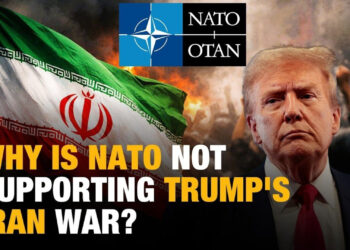























Why Is Fighting Alone as Shows Signs of Division?
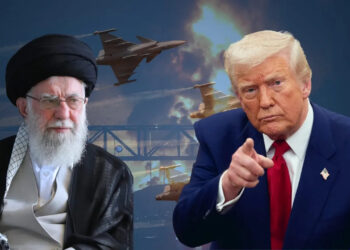
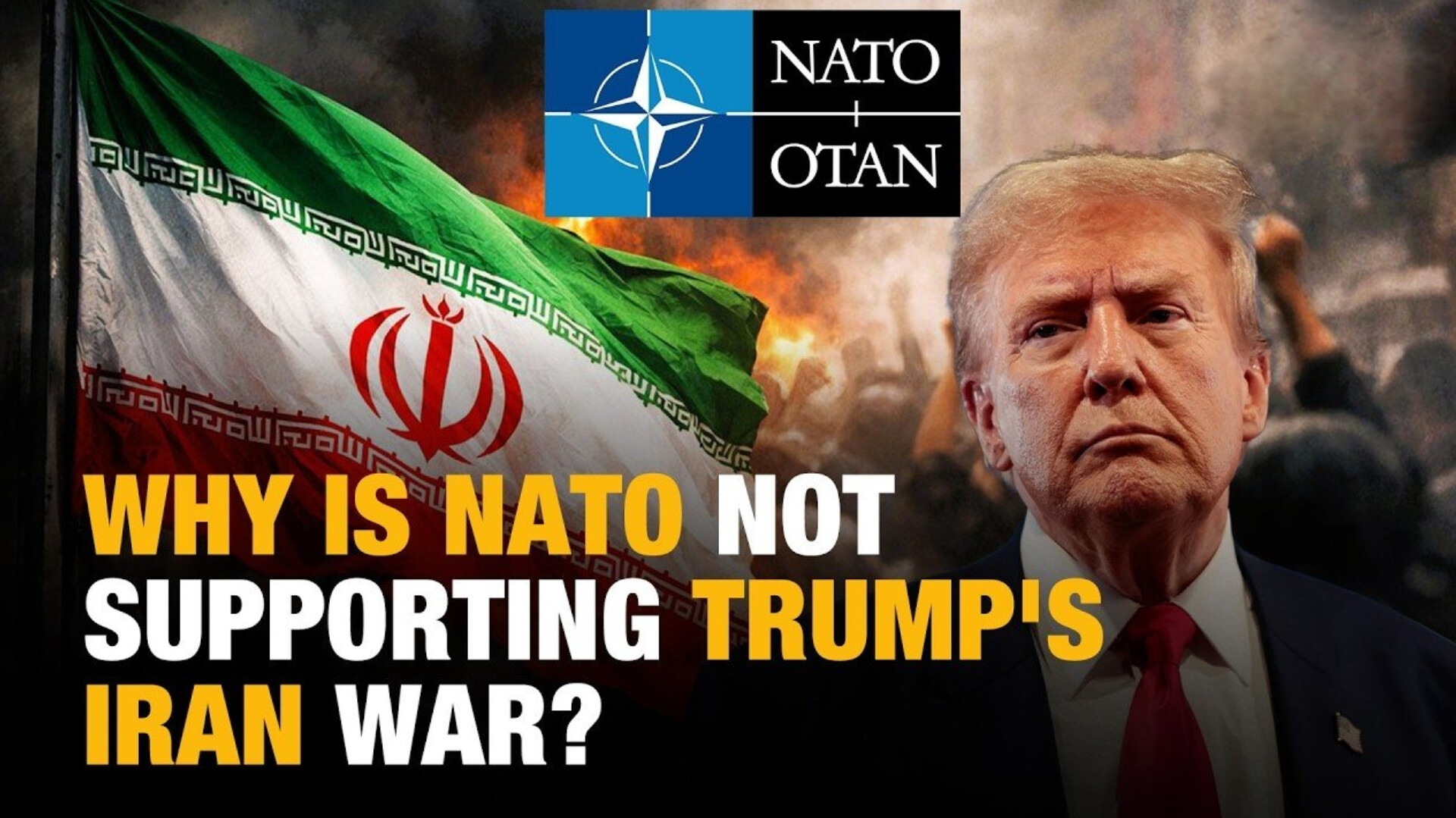
The growing geopolitical tensions between the United States and Iran have once again placed global attention on the fragile unity within NATO. While Washington has intensified its confrontational stance toward Tehran, several NATO allies appear reluctant to fully support the strategy, exposing widening cracks within the Western military alliance.
Former U.S. President has been a central figure in shaping the current trajectory of U.S.–Iran relations. His administration’s decision to withdraw from the landmark nuclear agreement with Iran marked a turning point in diplomatic relations between the two countries. The agreement, formally known as the (JCPOA), had been negotiated with the support of major world powers to limit Iran’s nuclear activities in exchange for sanctions relief.
Following the withdrawal, Washington imposed a series of sweeping economic sanctions on , arguing that Tehran’s regional influence and missile development posed a serious threat to international security. However, many European members of , including countries such as , , and the , expressed reservations about abandoning the agreement and warned that escalating pressure could destabilize the Middle East.
The resulting policy divide has highlighted a deeper strategic disagreement within NATO. While the United States has pursued a hard-line approach involving sanctions, military deterrence, and diplomatic isolation, several European allies have emphasized dialogue and multilateral diplomacy as the preferred path to prevent further escalation.
Analysts say this divergence reflects broader concerns among European governments about the consequences of a direct confrontation with Iran. The Middle East remains a critical region for global energy supplies, and any military escalation could disrupt oil markets, trigger refugee flows, and expand regional conflicts involving multiple state and non-state actors.
Furthermore, European leaders have also raised concerns about the long-term implications for NATO unity. Established in 1949 as a collective defense alliance, has historically depended on close coordination between the United States and its European partners. However, disputes over defense spending, strategic autonomy, and foreign policy priorities have increasingly strained those relationships.
Iran, meanwhile, has responded by strengthening ties with countries such as and , creating a more complex geopolitical landscape. These partnerships have further complicated efforts by Washington to isolate Tehran internationally.
Security experts warn that the current situation reflects a broader shift in global power dynamics. Rather than a unified Western bloc confronting adversaries, the international system is evolving into a multipolar order in which alliances are more fluid and national interests increasingly diverge.
For now, the United States continues to maintain a strong military presence in the Middle East while urging allies to take a firmer stance against Iran. Yet without clear consensus among NATO members, Washington’s strategy risks appearing increasingly unilateral.
Whether NATO can overcome its internal divisions and present a coordinated approach toward Iran remains an open question. What is clear, however, is that the alliance faces one of its most significant tests of unity in decades.