













Putin Visit In India: What Putin’s Visit Next Week Means For India-Russia Ties In A Turbulent World
By Samaran, Founding Editor
WorldNow.co.in
New Delhi, November 30, 2025
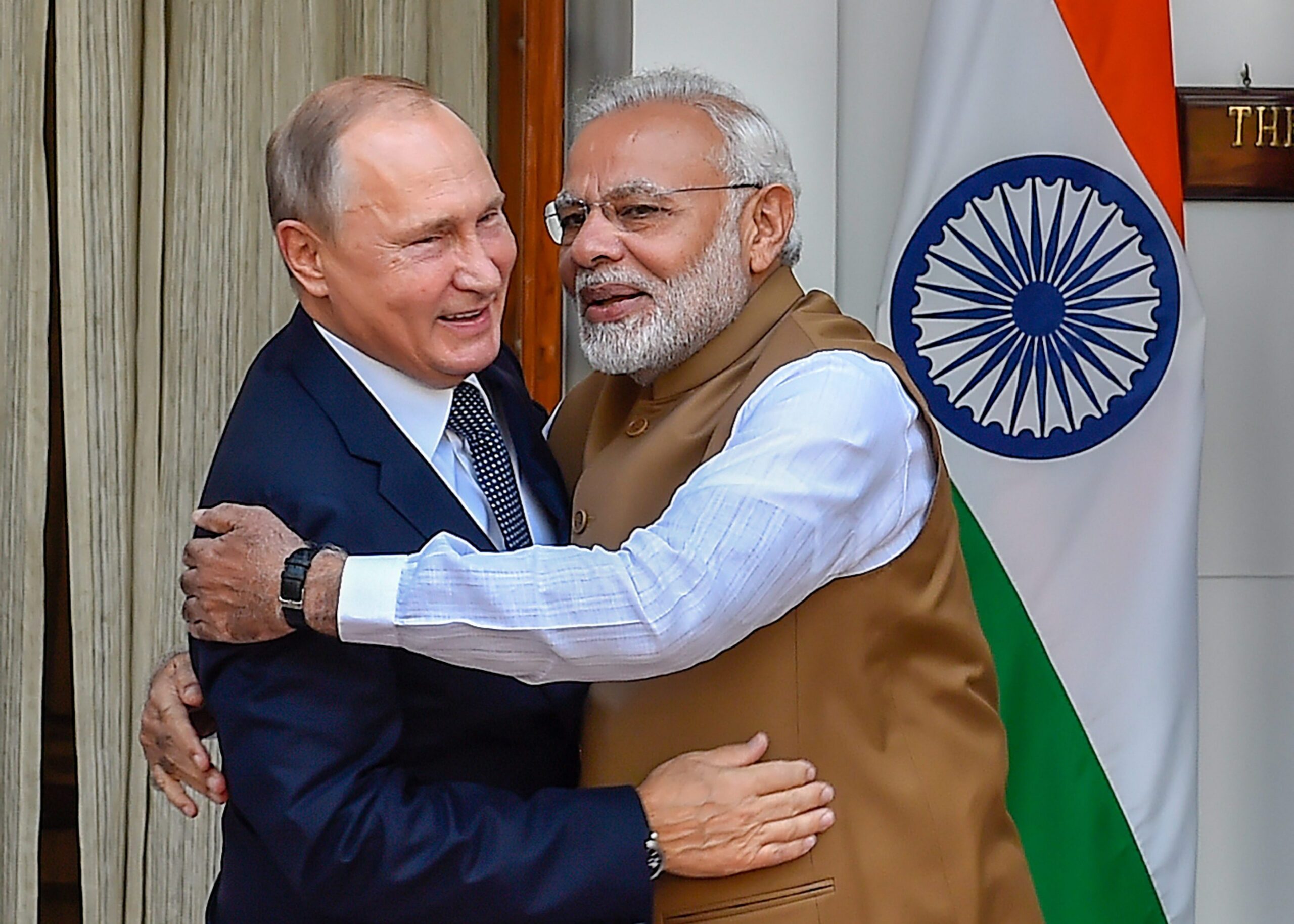
In a world fractured by escalating superpower rivalries, renewed trade wars, and the lingering shadows of the Ukraine conflict, Russian President Vladimir Putin’s upcoming state visit to India stands as a beacon of enduring strategic solidarity. Scheduled for December 4-5, 2025, at the invitation of Prime Minister Narendra Modi, the two-day trip marks Putin’s first official journey to New Delhi since December 2021—mere months before Russia’s invasion of Ukraine upended global alliances. Amid U.S. President Donald Trump’s aggressive tariff regime and tightening Western sanctions on Moscow, this 23rd India-Russia Annual Summit arrives at a pivotal moment, underscoring India’s deft navigation of multipolar diplomacy while bolstering a partnership that defies geopolitical headwinds.
The visit, confirmed by India’s Ministry of External Affairs (MEA) and the Kremlin, will feature high-level engagements, including bilateral talks between Putin and Modi, a ceremonial reception by President Droupadi Murmu, and the signing of several intergovernmental and commercial pacts. “This is a visit of great importance,” Kremlin spokesman Dmitry Peskov emphasized, highlighting its role in “comprehensively discussing the extensive agenda of Russian-Indian relations as a particularly privileged strategic partnership.” For India, it reaffirms its commitment to “strategic autonomy”—a policy mantra that allows New Delhi to court Moscow without alienating Washington or Brussels—while for Russia, it signals that isolation is far from absolute in a turbulent global order.
A Partnership Forged in Fire: Historical Resilience Amid Modern Storms
India-Russia ties, rooted in the Cold War-era Soviet support for New Delhi’s non-aligned stance, have evolved into a “Special and Privileged Strategic Partnership” since 2000. This framework has weathered storms: from India’s 2014 pivot toward the U.S.-led Quad to Russia’s 2022 “special military operation” in Ukraine, which prompted global opprobrium but not a rupture with India. Bilateral trade, which surged past $68.7 billion in the 2024-25 fiscal year, has been a stabilizing force, driven largely by discounted Russian crude oil imports that helped tame India’s energy inflation post-COVID.
Yet, the partnership’s true mettle is tested in defense. Russia supplies over 60% of India’s military hardware, including the S-400 air defense systems that proved “highly effective” during recent border operations. Putin’s visit comes as India’s air force grapples with a squadron shortfall, prompting discussions on acquiring Su-57 stealth fighters and the advanced S-500 missile shield—deals that could involve joint production to indigenize capabilities. “These acquisitions would be easier to integrate and significantly boost our long-range strike capabilities,” a senior Indian defense official noted anonymously, amid U.S. pressures via the Countering America’s Adversaries Through Sanctions Act (CAATSA).
Energy remains another pillar. With December’s Russian oil imports projected to dip—the lowest in three years due to sanctions evasion fears—the summit will push for diversified payment mechanisms in local currencies, shielding trade from dollar volatility. Talks may also accelerate the India-Eurasian Economic Union (EAEU) free trade agreement, opening doors for Indian pharmaceuticals, agricultural goods, and IT services to penetrate Russia’s market, while Moscow seeks greater access for its fertilizers and machinery.
Navigating the Turbulent World: Geopolitics and the Trump Factor
The summit’s subtext is unmistakably geopolitical. As Trump 2.0 imposes 50% tariffs on Indian exports—among the highest globally—New Delhi views Moscow as a counterweight, not a replacement for Western ties. Putin, in turn, leverages India to showcase Russia’s relevance beyond BRICS and SCO forums, where Modi and Xi Jinping recently flanked him in Tianjin. Discussions will likely touch on Ukraine, with Modi reiterating India’s call for a ceasefire while gleaning insights into Trump’s “Peace Plan,” which Peskov hinted could feature in pre-visit talks.
Critics in Western capitals decry the visit as evidence of India’s “tilt toward sanctioned Moscow,” potentially complicating U.S.-India defense pacts like COMCASA. Yet, as Foreign Minister S. Jaishankar asserted during his recent Moscow visit, “India’s partnerships are not zero-sum.” The summit could yield a labor mobility pact, nuclear energy collaborations, and aviation deals, including technology transfers for indigenous aircraft production.
Looking Ahead: A Blueprint for Multipolar Stability?
Putin’s arrival—complete with a banquet hosted by President Murmu—will not erase challenges: Russia’s non-tariff barriers to Indian exports persist, and U.S. sanctions loom over new arms deals. But in a world where hegemony clashes with autonomy, the India-Russia axis offers a pragmatic antidote. As Putin reportedly praised Modi as a “reasonable, wise leader” committed to national interests, the summit signals mutual respect amid flux.
For India, it’s a reminder that true power lies in diversified alliances; for Russia, a lifeline against encirclement. In this turbulent era, the Putin-Modi handshake may well chart a course for resilient, multipolar ties—proving that old friendships, when recalibrated, can illuminate the path forward.
Samaran is the Founding Editor of WorldNow.co.in, specializing in geopolitical analysis and South Asian affairs. Views expressed are personal.