













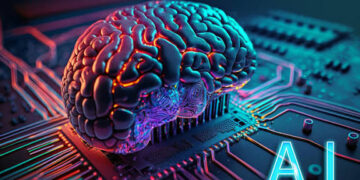











The world is witnessing an unprecedented surge in artificial intelligence (AI) advancements in 2025, reshaping industries, governance, and daily life. From autonomous AI agents to multimodal systems and stringent ethical regulations, the global AI landscape is evolving rapidly, with significant implications for economies and societies. Here’s a look at the latest developments driving the AI revolution.
Agentic AI Takes Center Stage
A new generation of AI agents capable of independently planning and executing complex tasks is transforming industries. Unlike traditional chatbots, these systems can perform intricate functions, such as financial analysis or website development, with minimal human oversight. According to Gartner, 25% of companies leveraging generative AI will pilot agentic systems in 2025, with adoption expected to double by 2027. This shift is poised to redefine workflows in sectors like IT, finance, and logistics.
Multimodal AI and Physical Integration
Multimodal AI models, which process text, images, audio, and video simultaneously, are enabling more intuitive human-machine interactions. Nvidia’s Cosmos platform, for instance, is pioneering “physical stack” AI, integrating digital systems with real-world applications like robotics and autonomous vehicles. Such advancements are fostering seamless collaboration between humans and machines, with implications for manufacturing, healthcare, and urban planning.
AI as a Climate Ally
AI is emerging as a critical tool in the fight against climate change. From optimizing energy grids to reducing agricultural waste through precision farming, AI-driven solutions are enhancing sustainability. Quantum-enhanced AI simulations are improving climate modeling and weather forecasting, offering hope for more accurate environmental predictions. These efforts align with global commitments to net-zero goals, with AI playing a pivotal role in green innovation.
Global Competition Heats Up
The AI race is intensifying, with new models challenging established players. China’s DeepSeek R1, developed at a fraction of the cost of Western models, has sparked debates about accessibility and innovation. Meanwhile, major releases like xAI’s Grok 3, Google’s Gemini 2.5 Pro, OpenAI’s o3 and o4-mini, Meta’s Llama 4, and Anthropic’s Claude 4 series are pushing the boundaries of AI capabilities. These models excel in reasoning, coding, and creative tasks, fueling a global innovation race.
Ethical AI Under Scrutiny
As AI adoption surges, so do concerns about ethics and accountability. The European Union’s AI Act, effective since February 2025, imposes strict regulations on high-risk AI applications, banning practices like invasive surveillance. The Council of Europe’s AI Framework Convention, adopted in 2025, mandates transparency and human rights protections. Globally, 28% of executives cite trust gaps as a barrier to AI adoption, underscoring the need for responsible development, according to PwC’s 2025 AI report.
AI-Powered Cybersecurity
In cybersecurity, AI is proving indispensable. Real-time anomaly detection and anti-phishing systems are bolstering defenses, while edge AI enhances privacy and speed in applications like autonomous vehicles and smart cities. These advancements are critical as cyber threats grow more sophisticated.
Global Investments and Policy Shifts
Governments are doubling down on AI infrastructure. The United Kingdom announced a £1 billion investment in AI research, while the European Union committed €200 billion at the Paris AI Action Summit. In the United States, the $500 billion Stargate Project aims to build AI supercomputers, though funding concerns linger. Meanwhile, U.S. executive orders are prioritizing AI literacy in schools, signaling a long-term commitment to workforce readiness.
Reasoning Models and Virtual Worlds
New AI models like OpenAI’s o3 and Google DeepMind’s Gemini 2.0 Flash Thinking are introducing advanced reasoning capabilities, improving accuracy in complex tasks like coding and problem-solving. Simultaneously, generative AI is revolutionizing entertainment. Google DeepMind’s Genie 3 creates interactive virtual worlds from single images, with applications in gaming, education, and robot training.
Challenges in Education and Workforce
AI’s integration into education is a double-edged sword. While it enhances personalized learning, issues like cheating with tools like ChatGPT persist. In the workforce, AI agents are boosting productivity by up to 50% in sectors like IT and finance, but concerns about job displacement and skill gaps remain.
Looking Ahead
The AI revolution in 2025 is a testament to human ingenuity and ambition, but it comes with challenges. Balancing innovation with ethical governance, ensuring equitable access, and addressing societal impacts will define the next phase of AI’s evolution. As nations and industries vie for leadership, the world stands at a pivotal moment in harnessing AI’s transformative potential.