

















DMDK–Vijay Alliance Could Redraw Tamil Nadu’s 2026 Electoral Map
Chennai:
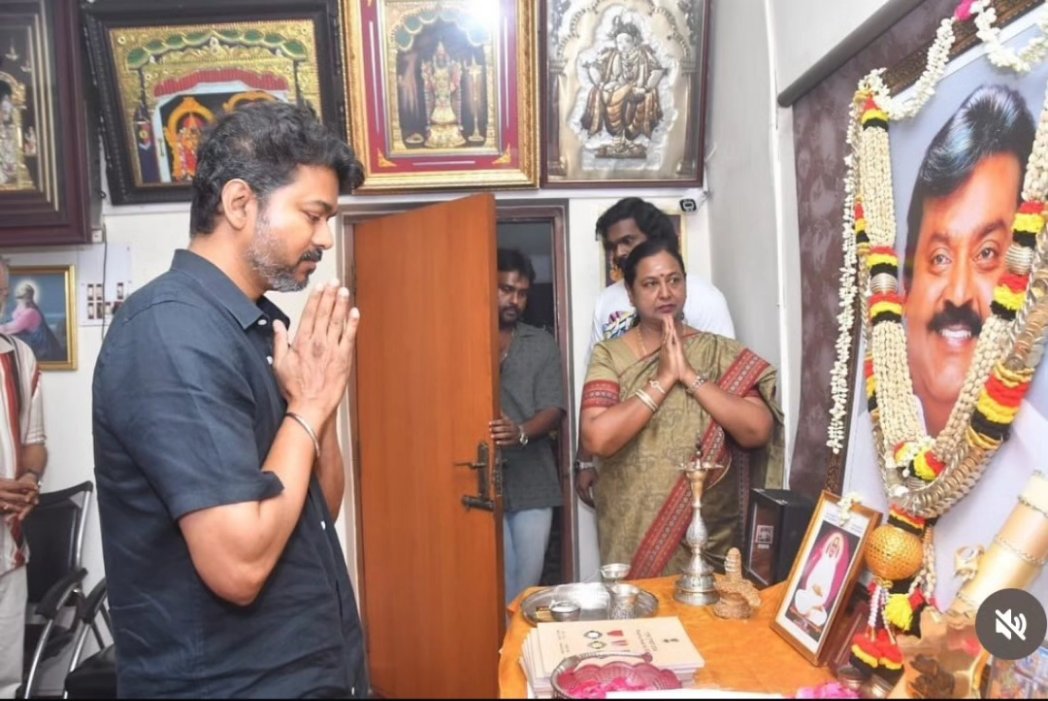
As Tamil Nadu inches closer to the 2026 Assembly elections, quiet political calculations are giving way to bold realignments. Among them, the possibility of an alliance between Desiya Murpokku Dravida Kazhagam (DMDK) and actor-turned-politician Vijay’s Tamilaga Vettri Kazhagam (TVK) is emerging as a potential game-changer—one that could disrupt the long-standing dominance of both the Dravida Munnetra Kazhagam (DMK) and the All India Anna Dravida Munnetra Kazhagam (AIADMK), while also marginalising the Naam Tamilar Katchi (NTK).
DMDK as the Political “Swing Option”
DMDK has historically functioned as a flexible political option in Tamil Nadu’s alliance-driven landscape. Rooted in the same Dravidian political ethos that shaped the DMK and AIADMK, the party has often played the role of a decisive ally rather than a standalone force.
Political analysts currently estimate DMDK’s independent ground-level vote share at around 3–4 per cent—a modest figure, but one that becomes strategically significant in a closely contested election.
Power vs Respect: A Strategic Crossroads
Within political circles, a clear narrative is emerging about DMDK’s strategic dilemma:
- Alliance with DMK:
If DMDK’s immediate priority is access to power and governance, aligning with the ruling DMK remains the most pragmatic option. The DMK’s strong organisational machinery and incumbency advantage offer electoral security, but often at the cost of reduced bargaining power and political identity for smaller allies. - Alliance with TVK:
If DMDK seeks long-term relevance, political respect, and a redefined role, an alliance with Vijay’s TVK appears more transformative. Such a partnership would position DMDK not as a junior ally, but as a co-architect of a new political alternative.
Why AIADMK Is Seen as Out of the Race
Notably, political observers increasingly argue that the AIADMK is no longer a central contender in alliance negotiations involving DMDK. Leadership fragmentation, organisational uncertainty, and declining voter confidence have weakened its appeal as a reliable partner. In the current scenario, AIADMK is viewed as struggling to set the agenda rather than shape it.
The Vijay Factor: Disruption at Scale
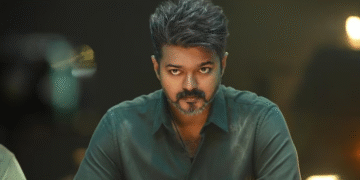
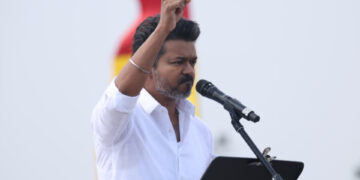
Vijay’s entry into electoral politics has injected a powerful emotional and generational current into Tamil Nadu’s political discourse. His appeal among youth, first-time voters, and politically disengaged sections is seen as a decisive multiplier.
According to senior political advisors and election strategists, a DMDK–TVK alliance could together command between 35 and 45 per cent of the popular vote, fundamentally altering the electoral arithmetic. While these figures remain projections, they underline the perceived disruptive potential of such a partnership.
Impact on DMK, AIADMK and NTK
A consolidated DMDK–TVK front would pose a direct challenge to the DMK’s Dravidian consolidation, fragment AIADMK’s residual vote base, and significantly blunt NTK’s claim as the primary “alternative” force. In effect, the election would shift from a traditional bipolar contest to a high-stakes triangular—or even quadrangular—battle.
A Turning Point Election?
The 2026 Tamil Nadu Assembly election is increasingly being framed as a referendum not just on governance, but on political renewal. For DMDK, the choice of alliance could define whether it remains a peripheral player or re-emerges as a central force. For Vijay and TVK, partnering with DMDK could provide the organisational depth needed to convert popularity into power.
As alliance talks, informal signals, and strategic silences continue, one thing is clear: if DMDK and Vijay come together, Tamil Nadu’s political game may be rewritten—forcing every major party to rethink its assumptions, strategies, and survival.