






















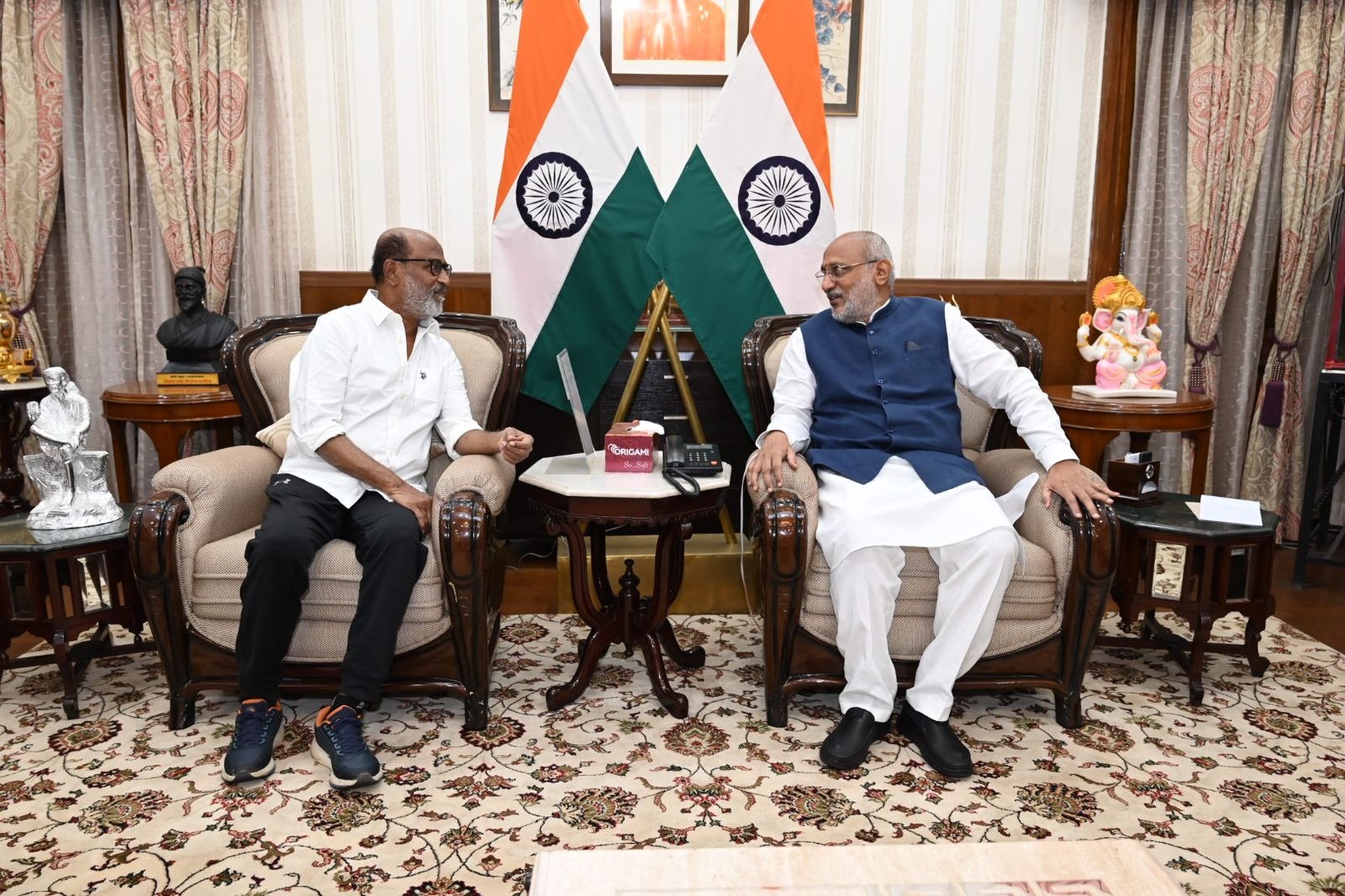
New Delhi, September 9, 2025 – In a decisive victory for the ruling National Democratic Alliance (NDA), Maharashtra Governor C.P. Radhakrishnan was elected as India’s 15th Vice President on Tuesday, securing 452 first-preference votes in a secret ballot conducted by members of Parliament. The election, which followed the abrupt resignation of incumbent Jagdeep Dhankhar in July, saw Radhakrishnan triumph over the opposition INDIA bloc’s candidate, former Supreme Court Justice B. Sudershan Reddy, who garnered 300 votes.
Returning Officer and Rajya Sabha Secretary-General P.C. Mody announced the results after counting 767 votes cast out of an electoral college of 781 members, comprising elected and nominated MPs from both houses of Parliament. Of these, 752 were valid, with 15 declared invalid and 14 MPs abstaining. The NDA’s comfortable margin of 152 votes exceeded expectations and hinted at possible cross-voting from the opposition ranks, as the INDIA bloc had anticipated support from 315 members but fell short.
Prime Minister Narendra Modi, who cast the first vote in the polling that began at 10 a.m., congratulated Radhakrishnan on social media, describing his life as “devoted to serving society and empowering the poor and marginalised.” Modi expressed confidence that Radhakrishnan would be an “outstanding” Vice President, strengthening constitutional values and contributing to a “Viksit Bharat” (Developed India). In a subsequent meeting at Parliament House, Modi, along with Home Minister Amit Shah and other senior leaders, felicitated the Vice President-elect.
Radhakrishnan, 67, a veteran Bharatiya Janata Party (BJP) leader from Tamil Nadu with deep roots in the Rashtriya Swayamsevak Sangh (RSS), becomes the third person from his home state to hold the office. Born in Tiruppur on October 20, 1957, he was first elected to the Lok Sabha from Coimbatore in 1998 and re-elected in 1999 during Atal Bihari Vajpayee’s tenure. He later served as Tamil Nadu BJP president, chaired the Coir Board from 2016 to 2020—boosting exports to record highs—and held gubernatorial positions in Jharkhand (2023-2024), Telangana, Puducherry, and most recently Maharashtra since July 2024.
His nomination in August, endorsed by NDA allies including TDP, JD(U), and even non-aligned parties like YSRCP, underscored the coalition’s unity. Radhakrishnan, an agriculturist and industrialist known for his integrity, has long advocated for social empowerment, river-linking projects, and anti-terrorism efforts. He will assume office soon, succeeding Dhankhar as ex-officio Chairman of the Rajya Sabha, where his administrative experience is expected to guide parliamentary proceedings.
Justice Reddy, 79, from Telangana, conceded gracefully, stating that the “ideological battle continues with ever greater vigour” and extending best wishes to Radhakrishnan. A retired Supreme Court judge renowned for landmark rulings against the Salwa Judum vigilante group and critiquing government inaction on black money probes, Reddy’s candidacy symbolized the opposition’s push for judicial independence and constitutional ethos. Congress leader Jairam Ramesh called the result a “moral and political defeat” for the BJP despite its arithmetic win, attributing the opposition’s 26% vote share to MPs voting “according to conscience.”
The election, held without party whips, highlighted subtle shifts in parliamentary dynamics. Parties like Biju Janata Dal (BJD), Bharat Rashtra Samithi (BRS), and Shiromani Akali Dal (SAD) abstained, while Union Minister Kiren Rijiju claimed “many opposition MPs” supported Radhakrishnan after listening to their inner voice. Maharashtra Chief Minister Devendra Fadnavis hailed the win as a “matter of great joy,” noting Radhakrishnan’s ties to the state.
President Droupadi Murmu congratulated Radhakrishnan, praising his “decades of rich experience in public life” for advancing national progress. Defence Minister Rajnath Singh and JD(U) leader Nitish Kumar echoed similar sentiments, anticipating strengthened parliamentary traditions under his leadership.
As India navigates economic growth and global challenges, Radhakrishnan’s elevation marks a continuity of NDA governance at the highest echelons, with the Vice President’s role—second-in-line to the presidency—poised to influence legislative agendas in the Upper House.