









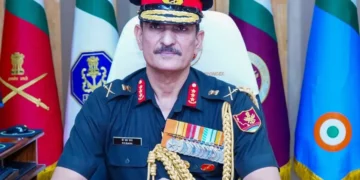












New Delhi, September 15, 2025 – In a bid to fortify India’s internal security apparatus against mass agitations, Union Home Minister Amit Shah has instructed the Bureau of Police Research and Development (BPR&D) to conduct an exhaustive study of major protests dating back to 1974, with a sharp focus on their financial underpinnings and shadowy orchestrators, sources familiar with the directive said on Monday.
The initiative, aimed at developing a comprehensive standard operating procedure (SOP) to preempt and manage large-scale unrest, reflects growing concerns within the government over the role of “vested interests” in fueling social and political flashpoints. According to a report by *The Indian Express*, Shah’s orders emphasize dissecting the “financial aspects” and “behind-the-scenes players” behind these movements, alongside their root causes and ultimate outcomes. The study will cover key agitations since India’s Independence, but with particular scrutiny on those post-1974, including the landmark Jayaprakash Narayan-led movement that toppled Indira Gandhi’s government.
“This is about learning from history to build proactive defenses,” a senior Home Ministry official told *The Indian Express* on condition of anonymity. “Protests have often been hijacked by external funding and hidden networks, leading to chaos. The SOP will equip law enforcement with tools for early detection and neutral intervention.”
The directive comes amid a spate of high-profile unrest in recent years, from the 2020-2021 farmers’ protests against agricultural reforms to the 2019 Citizenship Amendment Act demonstrations and recurring communal flare-ups. Government insiders noted that the BPR&D’s analysis will also extend to irregular financial flows potentially linked to terror networks, prompting a parallel SOP for tracking such channels to dismantle funding structures supporting extremism or organized dissent.
Additionally, Shah has tasked the bureau with examining religious congregations nationwide to identify patterns in stampedes and accidents, seeking to enhance crowd management protocols.
The move has sparked immediate debate. Opposition leaders decried it as an assault on democratic dissent, with Congress spokesperson Jairam Ramesh posting on X: “From studying protests to surveilling citizens—Shah’s playbook reeks of authoritarianism. History isn’t for rewriting; it’s for learning, not suppressing.” Civil rights activists echoed these sentiments, warning that probing funding could be weaponized to target legitimate advocacy groups.
BJP defenders, however, hailed the step as a pragmatic response to “anarchic disruptions.” Party spokesperson Sambit Patra told reporters, “In a democracy, the right to protest is sacred, but not when it’s bankrolled by anti-national elements. This is about protecting peace, not stifling voices.”
India has witnessed a surge in protest-related incidents in the past decade, with data from the National Crime Records Bureau indicating over 50,000 such events annually by 2024, many escalating into violence. The government’s push aligns with broader internal security reforms under Prime Minister Narendra Modi’s administration, including enhanced surveillance under the Unlawful Activities (Prevention) Act and digital tracking of suspicious transactions.
BPR&D, a think tank under the Home Ministry, is expected to present preliminary findings within six months, with the SOP rollout targeted for early 2026. Sources indicated that international best practices from countries like the UK and France, which have SOPs for handling mass demonstrations, will inform the framework.
As India navigates deepening socio-economic divides—exacerbated by inflation, unemployment, and regional disparities—these measures underscore a hardening stance on public order. Whether they foster stability or erode freedoms remains a flashpoint in the nation’s polarized discourse.