















 Sets New Benchmarks in Global Cosmetic Education and Women Empowerment](https://worldnow.co.in/wp-content/uploads/2026/05/FB_IMG_1779691614478-360x180.jpg)




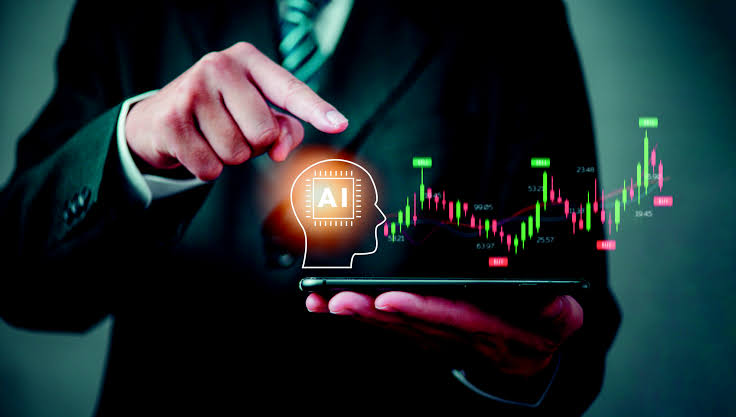
AI as Your Investment Advisor: Revolution or Risk in the World of Finance?
By International Financial Desk
Artificial Intelligence (AI) is rapidly transforming the global investment landscape, moving from a back-end analytical tool to a front-line financial advisor. From selecting stocks to predicting market movements and executing trades in milliseconds, AI is increasingly becoming a powerful force in modern investing. But as its influence grows, a critical question emerges: Can investors truly trust AI with their money?
—
The Rise of AI in Investing
Over the past decade, AI-driven platforms have gained popularity among both retail and institutional investors. These systems leverage vast datasets, machine learning algorithms, and real-time analytics to identify patterns that human analysts might miss. Robo-advisors, algorithmic trading systems, and AI-powered financial apps are now widely used across global markets.
AI offers several advantages:
Speed and Efficiency: Executes trades faster than humanly possible
Data Processing: Analyzes massive volumes of financial and economic data
Emotion-Free Decisions: Eliminates human biases like fear and greed
24/7 Monitoring: Tracks global markets continuously without fatigue
—
Why Investors Are Turning to AI
The appeal of AI lies in its promise of smarter, data-driven decisions. For new investors, AI simplifies complex financial processes. For experienced traders, it enhances precision and reduces risk exposure.
Key drivers behind AI adoption include:
Growing accessibility of financial technology
Increased volatility in global markets
Demand for personalized investment strategies
Cost-effective alternatives to traditional financial advisors
—
The Risks Behind the Algorithms
Despite its advantages, AI is not without limitations. Blind reliance on automated systems can expose investors to significant risks.
Major concerns include:
Lack of Transparency: Many AI models operate as “black boxes,” making decisions that are difficult to interpret
Overfitting Data: Algorithms may perform well on past data but fail in unpredictable market conditions
Systemic Risks: Widespread use of similar AI strategies could amplify market crashes
Cybersecurity Threats: Increased dependence on digital platforms raises vulnerability to hacking
Human Judgment vs Machine Intelligence
Experts argue that AI should complement—not replace—human decision-making. While AI excels at data analysis, it lacks contextual understanding, ethical reasoning, and long-term vision.
Successful investing often requires:
Understanding geopolitical events
Evaluating regulatory changes
Assessing human behavior and sentiment
These are areas where human insight remains crucial.
—
Regulation and the Road Ahead
Governments and financial regulators worldwide are beginning to address the rise of AI in finance. Policies are being developed to ensure transparency, accountability, and investor protection.
Future trends may include:
Stricter regulations on AI-driven trading systems
Increased disclosure requirements
Hybrid advisory models combining AI and human expertise
—
Conclusion: Trust, But Verify
AI is undeniably reshaping the investment world, offering unprecedented tools and opportunities. However, entrusting it entirely with financial decisions may be premature. Investors are advised to use AI as a support system rather than a standalone authority.
In the evolving world of finance, the smartest strategy may not be choosing between human and artificial intelligence—but finding the right balance between the two.
 Sets New Benchmarks in Global Cosmetic Education and Women Empowerment](https://worldnow.co.in/wp-content/uploads/2026/05/FB_IMG_1779691614478-350x250.jpg)