













 Sets New Benchmarks in Global Cosmetic Education and Women Empowerment](https://worldnow.co.in/wp-content/uploads/2026/05/FB_IMG_1779691614478-360x180.jpg)



Consciousness as the Hidden Architecture Behind Fundamental and Quantum Physics: A New Scientific Debate Emerges
March 17, 2026
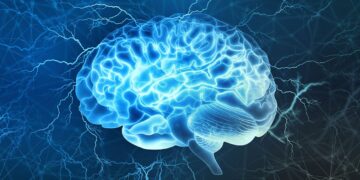
In a provocative shift that could redefine the foundations of modern science, a growing number of researchers are exploring the possibility that consciousness is not merely a byproduct of the brain, but a fundamental component underlying reality itself. This emerging perspective challenges long-standing assumptions in both Quantum Physics and Fundamental Physics, opening new frontiers at the intersection of science, philosophy, and metaphysics.
For decades, physics has operated under the assumption that the universe exists independently of observation. However, peculiar phenomena in Quantum Mechanics—such as wave-particle duality and observer-dependent outcomes—have long hinted at a deeper, more mysterious layer of reality. The famous Observer Effect suggests that the act of measurement itself can alter the state of a system, raising fundamental questions about the role of the observer.
Recent interdisciplinary studies are pushing this inquiry further. Some physicists and cognitive scientists now argue that consciousness may serve as the “hidden architecture” upon which physical laws are structured. Rather than emerging from matter, consciousness could be intrinsic to the fabric of the universe—similar to space, time, and energy.
This idea resonates with interpretations such as Panpsychism, which proposes that consciousness exists, in some form, in all matter. Others draw parallels with Integrated Information Theory, suggesting that systems with high levels of informational complexity inherently possess conscious experience.
Critics, however, caution against conflating philosophical speculation with empirical science. They argue that while quantum phenomena are indeed counterintuitive, there is insufficient experimental evidence to conclude that consciousness plays a causal role in physical processes. The scientific community remains divided, with many calling for more rigorous, testable models.
Despite skepticism, the implications of this debate are profound. If consciousness is indeed foundational, it could revolutionize our understanding of reality, potentially bridging gaps between physics and other disciplines such as neuroscience, artificial intelligence, and even spirituality. It may also lead to a paradigm where the universe is not seen as a purely mechanical system, but as an interconnected, conscious whole.
As research continues, one thing is clear: the question of consciousness is no longer confined to philosophy or psychology. It is rapidly becoming one of the most intriguing and controversial frontiers in modern science.