











 Sets New Benchmarks in Global Cosmetic Education and Women Empowerment](https://worldnow.co.in/wp-content/uploads/2026/05/FB_IMG_1779691614478-360x180.jpg)


The X-Factor in Tamil Nadu Assembly Polls: Comparing the Victory Positions of Four Key Leaders
Chennai: As political momentum gradually builds toward the next Tamil Nadu Assembly elections, the state’s electoral landscape is once again shaping into a contest defined by personality, narrative, and strategic alliances. While traditional Dravidian forces remain dominant, the rise of alternative voices and celebrity politics has introduced a new “X-factor” that could influence the outcome in unpredictable ways.
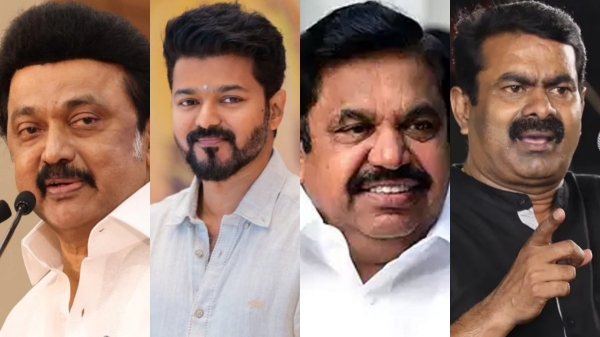
Four leaders currently represent the major political poles of the state’s evolving political spectrum: M. K. Stalin, Edappadi K. Palaniswami, Seeman, and actor-turned-political entrant Vijay.
Each of them occupies a distinct “victory position” based on political structure, voter appeal, and strategic advantages.
—
The X-Factor: Changing Voter Psychology
Tamil Nadu politics has historically been dominated by the two Dravidian giants—Dravida Munnetra Kazhagam (DMK) and All India Anna Dravida Munnetra Kazhagam (AIADMK). However, a generational shift among voters, increasing urbanization, and the influence of social media are creating new variables.
The biggest X-factor in the upcoming election may not simply be party strength but vote fragmentation among younger voters, particularly in urban and semi-urban constituencies. The emergence of alternative political narratives—Tamil nationalism, anti-establishment sentiment, and celebrity-driven politics—could reshape the traditional two-party dominance.
—
M. K. Stalin: Incumbency and Governance Advantage
As the sitting Chief Minister, M. K. Stalin holds the strongest structural advantage in the electoral contest.
His leadership benefits from the administrative machinery of governance, welfare programs, and a stable party organization built by the Dravida Munnetra Kazhagam over decades.
Victory Position:
Strong grassroots network across districts
Welfare-driven governance model appealing to rural voters
Alliance politics that historically strengthens electoral math
However, anti-incumbency sentiment and rising expectations from urban voters could challenge the ruling establishment.
—
Edappadi K. Palaniswami: Opposition Consolidation
Former Chief Minister Edappadi K. Palaniswami represents the principal opposition force through the All India Anna Dravida Munnetra Kazhagam.
After internal power struggles within the party following the deaths of J. Jayalalithaa and M. G. Ramachandran, Palaniswami has gradually consolidated leadership.
Victory Position:
Strong support base in western Tamil Nadu
Administrative experience as former chief minister
Potential to consolidate anti-DMK votes
Yet the party continues to face the challenge of rebuilding its statewide charisma once embodied by Jayalalithaa.
—
Seeman: Ideological Mobilization
Seeman, leader of the Naam Tamilar Katchi, has built a political movement rooted in Tamil nationalism, linguistic pride, and identity politics.
While his party has yet to secure significant legislative victories, its vote share has steadily increased in recent elections, particularly among young voters.
Victory Position:
Highly motivated ideological cadre
Strong digital presence and youth outreach
Growing protest vote base
However, converting vote share into assembly seats remains the biggest challenge for his movement.
—
Vijay: The Wild Card
The entry of superstar Vijay into politics has introduced an unpredictable dimension to Tamil Nadu’s electoral equation.
With an enormous fan base and influence among younger demographics, Vijay represents the archetype of celebrity politics in the state—an arena historically shaped by figures like M. G. Ramachandran and J. Jayalalithaa.
Victory Position:
Massive youth and fan-club network
Strong cultural influence through cinema
Ability to disrupt traditional vote banks
However, the sustainability of celebrity appeal in electoral politics will depend on organizational strength and policy clarity.
—
The Electoral Equation Ahead
The Tamil Nadu Assembly polls may ultimately hinge on three decisive factors:
1. Youth voter turnout
2. Alliance formations among major parties
3. Vote fragmentation caused by emerging political forces
While M. K. Stalin enters the race with the advantage of incumbency, Edappadi K. Palaniswami seeks to revive the opposition’s momentum. Meanwhile, Seeman continues to expand ideological politics, and Vijay remains the most unpredictable wildcard.
As Tamil Nadu moves closer to the next electoral cycle, the biggest X-factor may not be a single leader—but the changing aspirations of a new generation of voters.