












 Sets New Benchmarks in Global Cosmetic Education and Women Empowerment](https://worldnow.co.in/wp-content/uploads/2026/05/FB_IMG_1779691614478-360x180.jpg)



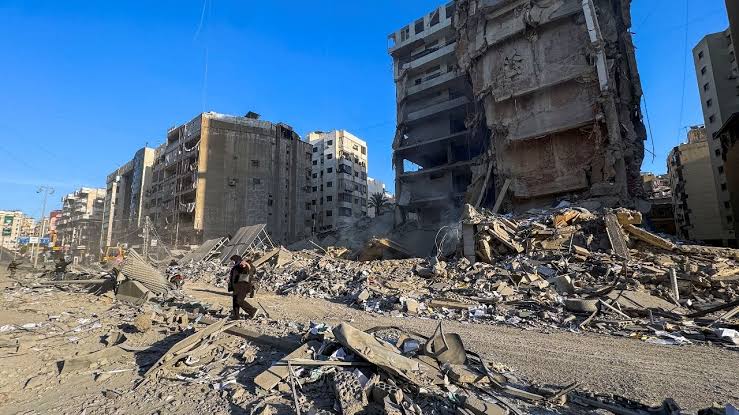
Echoes of 1914: Are We Watching History Repeat Itself?
In moments of escalating global tension, history often becomes the most powerful mirror through which the present can be understood. As the world edges closer to what many fear could become a wider international conflict, military historian has warned that the developments of the past week carry unsettling parallels with the events that triggered the in 1914.
Walters argues that the current geopolitical climate reflects a familiar pattern: regional tensions rapidly escalating through alliances, miscalculations, and nationalist fervor. The comparison to 1914 is not merely rhetorical. In that year, what began as a regional crisis following the soon spiraled into a full-scale global war due to a chain reaction of military alliances and political commitments.
Today, the world once again finds itself navigating a complex web of alliances, rivalries, and military posturing. In the past seven days alone, diplomatic breakdowns, military alerts, and intensified rhetoric among global powers have raised alarms among historians and strategic analysts alike.
According to Walters, one of the most striking similarities with 1914 is the speed at which crises can escalate beyond the control of political leaders. In the early twentieth century, Europe’s powers believed they could manage tensions through deterrence and limited military mobilization. Instead, those moves triggered a cascade of reactions that ultimately engulfed the world in war.
Modern geopolitics is vastly different in technological terms, yet the underlying dynamics remain disturbingly similar. National pride, security fears, and alliance obligations continue to shape decisions in ways that can rapidly transform localized disputes into international confrontations.
Another factor amplifying the risk today is the speed of communication and information warfare. In 1914, governments relied on telegraphs and diplomatic cables; today, information spreads instantly through digital networks, social media, and global news platforms. While this accelerates awareness, it can also intensify public pressure on governments to respond quickly and forcefully.
Walters emphasizes that historical comparisons should not be interpreted as predictions but as warnings. The lesson of 1914 is not that war is inevitable, but that it can emerge from a sequence of decisions made under pressure, fear, and uncertainty.
The international community now faces a critical moment. Diplomatic restraint, strategic patience, and open communication channels remain essential to preventing a regional confrontation from spiraling into a global catastrophe.
More than a century after the guns first fired in 1914, the world continues to grapple with the same fundamental challenge: how to manage power, rivalry, and fear without allowing them to ignite another devastating war.
History may not repeat itself exactly, but as historians like Walters remind us, its echoes can become dangerously loud when ignored.

 Sets New Benchmarks in Global Cosmetic Education and Women Empowerment](https://worldnow.co.in/wp-content/uploads/2026/05/FB_IMG_1779691614478-120x86.jpg)