










 Sets New Benchmarks in Global Cosmetic Education and Women Empowerment](https://worldnow.co.in/wp-content/uploads/2026/05/FB_IMG_1779691614478-360x180.jpg)


Stalin Rules Out Power Sharing with Congress in Tamil Nadu Government
Chennai:
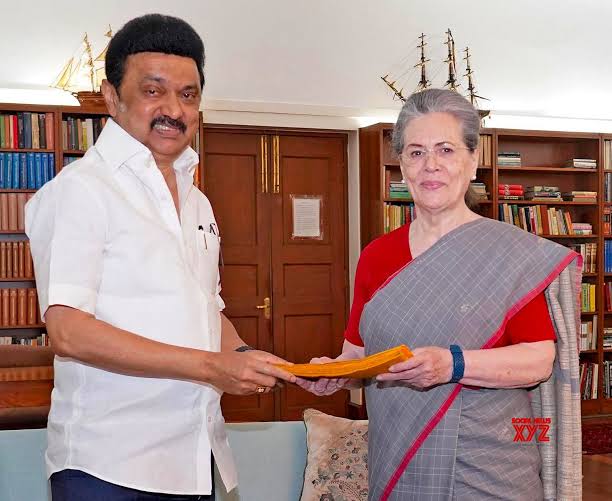
Tamil Nadu Chief Minister and DMK president M.K. Stalin has categorically ruled out any form of power sharing with alliance partners in the event of a DMK-led victory in the 2026 Assembly elections, asserting that the concept “does not apply to Tamil Nadu” and “will not work” in the state’s political context.
Speaking at the India Today Tamil Nadu Roundtable, Stalin sought to draw a clear line between electoral alliances and post-poll governance. While reaffirming the strength and unity of the DMK–Congress alliance going into the 2026 elections, he maintained that governance in Tamil Nadu has traditionally rested with the party that secures the people’s mandate, rather than being divided among coalition partners.
“Power sharing is not a model that suits Tamil Nadu,” Stalin said, underscoring that the state’s political culture and administrative structure are distinct from those in other parts of the country.
Congress Pushback
Stalin’s remarks drew swift responses from Congress leaders, signalling underlying tensions within the alliance. Congress MP Manickam Tagore said that it is ultimately the voters who will decide the nature of governance and whether coalition partners should have a role in government.
Senior Congress leader and political analyst Praveen Chakravarty questioned the assertion that Tamil Nadu is uniquely unsuited to power-sharing arrangements, pointing out that coalition governments have functioned in several Indian states under varied political and social conditions.
Their comments highlight a growing unease within the Congress, which, despite being a long-standing ally of the DMK, has historically remained outside the state cabinet even after winning Assembly seats as part of the alliance.
A Familiar Pattern
Stalin’s stance echoes the DMK’s approach in previous elections. In past Assembly polls, alliance partners—including the Congress—secured seats but were not accommodated with ministerial positions. The DMK has consistently argued that a single-party government ensures administrative stability and policy coherence.
At the roundtable, Stalin defended his government’s record, pointing to what he described as strong economic performance, welfare delivery, and social justice initiatives since the DMK returned to power in 2021. He stressed that electoral unity with allies remains intact and focused on defeating opposition forces in 2026.
Political Implications
While the DMK–Congress alliance remains formally strong, the renewed debate over power sharing could test internal cohesion as the election approaches. For the Congress, which has been striving to reassert its relevance in southern states, continued exclusion from executive power may fuel demands for a greater say beyond electoral cooperation.
For now, Stalin has made it clear that alliance politics in Tamil Nadu will stop at the ballot box, not extend into the cabinet—leaving the question of long-term alliance management open as opposition parties seek to exploit any emerging cracks ahead of the 2026 contest.