











 Sets New Benchmarks in Global Cosmetic Education and Women Empowerment](https://worldnow.co.in/wp-content/uploads/2026/05/FB_IMG_1779691614478-360x180.jpg)



Parliament Erupts Over Former Army Chief Naravane’s Memoir; Debate Raises Questions on Disclosure by Retired Officers
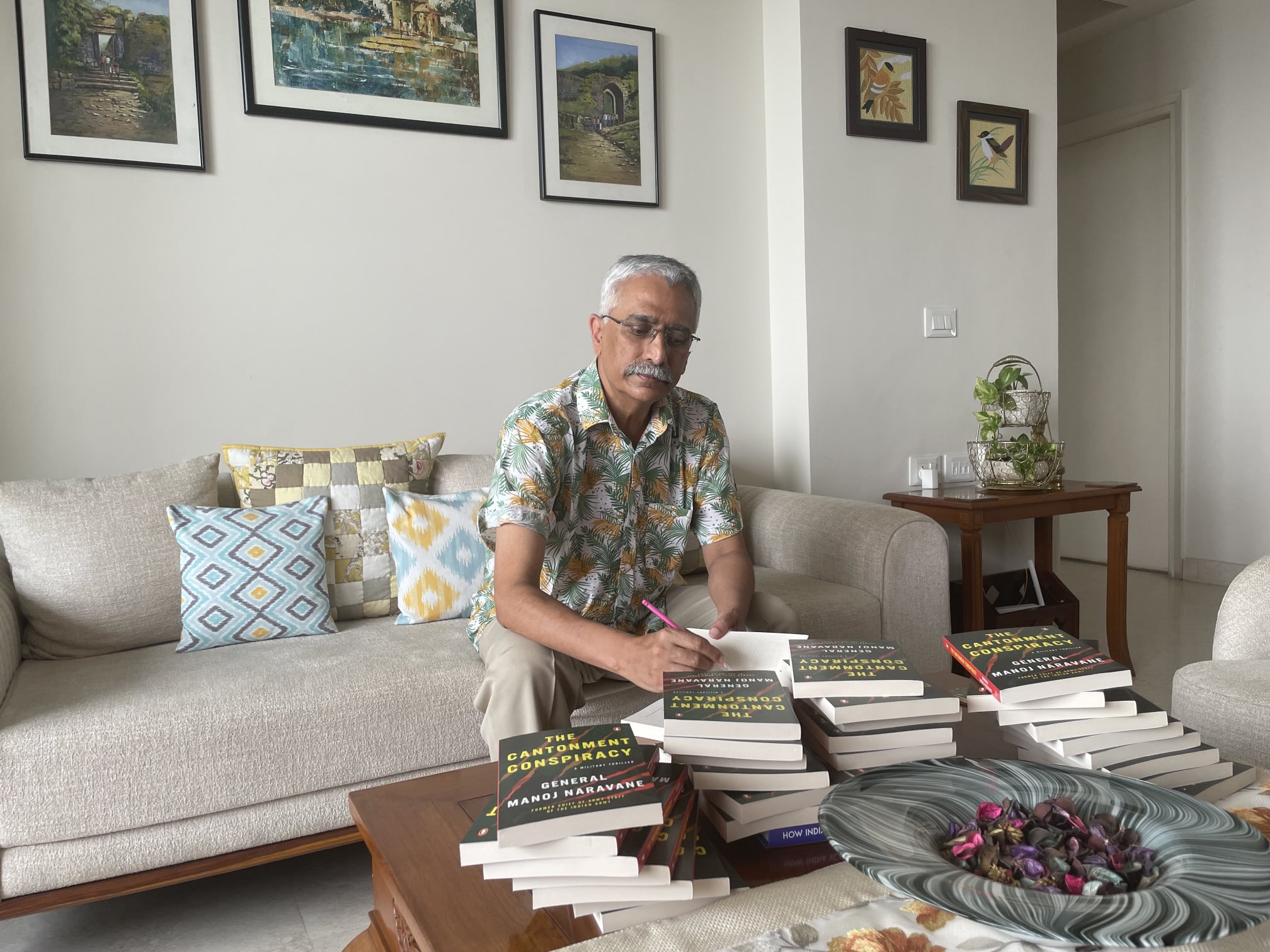
New Delhi, 2 February 2026 — A fiery confrontation in the Indian Lok Sabha on Monday spotlighted a long-pending and controversial unpublished memoir by former Army Chief General Manoj Mukund Naravane (Retd), triggering debate over national security, parliamentary rules and what retired senior officers can disclose.
The incident erupted during the Budget Session of Parliament when Leader of the Opposition Rahul Gandhi attempted to quote from media excerpts linked to Naravane’s memoir, Four Stars of Destiny, purportedly revealing sensitive military and policy details. Defence Minister Rajnath Singh and Home Minister Amit Shah objected strongly, asserting that the book has not been officially published and therefore cannot be treated as an authenticated source in Parliament. Speaker Om Birla intervened repeatedly, referring to parliamentary rules governing permissible references in House debates.
Source of the Row
Four Stars of Destiny, which was initially slated for publication in 2024, has been languishing in limbo for over a year after being submitted to its publisher and undergoing review by the Ministry of Defence (MoD). Standard practice requires senior military memoirs involving operational details to be screened for sensitive content before release; Naravane’s account reportedly touches on issues such as the 2020 India-China standoff in eastern Ladakh and internal discussions around the controversial Agnipath recruitment scheme.
The Defence Minister and ruling party MPs argued that because the memoir is unpublished, quoting from it — even indirectly through a magazine report — violated House norms. The government stressed that only formally published and authenticated material directly relevant to parliamentary business should be cited.
Parliamentary Rules at Play
The Speaker invoked Rule 349 of the Lok Sabha Rules of Procedure and Conduct of Business, which limits reading external books or letters in debates unless they are directly related to the business before the House. Under this rule, MPs are barred from quoting unpublished material not properly tabled as a parliamentary document. Government representatives said the reference to the memoir breached this convention.
Opposition members, however, argued that the material raised matters of “urgent public importance”, particularly relating to defence and India’s handling of the border situation with China, and should therefore be discussed. They accused the government of suppressing authoritative insights and shielding the executive from scrutiny.
What the Memoir Allegedly Contains
While the full text has not been released, media reports indicate the memoir includes candid recollections of high-level military and political decision-making. Notable content, previously reported in media over circulated extracts, described late-night engagements with political leadership during the Chinese troop build-up in 2020, and critiques of how the Agnipath scheme was designed and rolled out, diverging from the Army’s original recommendations.
These revelations appear to have prompted heightened scrutiny and a more stringent review process by the MoD, delaying the book’s publication. General Naravane himself has said the manuscript is “under review” and that the responsibility to secure clearance lies with the publisher and the Ministry.
Norms and Legal Framework for Retired Officers
India does not have a single, comprehensive statute governing publications by retired military officials, but several overlapping rules and expectations constrain disclosures of sensitive information:
- The Army Rules, 1954 bar serving personnel from publishing or sharing political, service or classified information without prior government sanction — but these apply primarily while in service.
- For retired officers, the legal framework is less explicit, but the Central Civil Services (Pension) Rules, 1972 were amended in 2021 to require prior approval before ex-government servants, particularly those from security or intelligence backgrounds, publish material related to their former domains. While the armed services are not directly covered, defence sources say similar expectations apply to retired military leaders due to the confidential nature of their work.
- In practice, memoirs and books by former chiefs undergo review by the MoD or related agencies to ensure no strategic, operational or classified information is inadvertently disclosed.
Observers note that these layered and sometimes vague regulations have created ambiguity over what can be published by retired officers without prior clearance, often prompting prolonged reviews and editorial oversight.
Political and Public Reaction
The skirmish in the Lok Sabha reflected broader political tensions. Government supporters accused the Opposition of flouting parliamentary rules and wasting legislative time, while the Opposition framed the episode as symbolic of resistance to transparency on matters of national security. The House was temporarily stalled by repeated interruptions, forcing a brief adjournment during the Motion of Thanks debate.
As of now, Four Stars of Destiny remains unpublished and under review. The controversy has intensified debate over how democracies balance freedom of expression for retired officials with national security imperatives, and how legislative bodies should treat sensitive external sources in formal proceedings.