













 Sets New Benchmarks in Global Cosmetic Education and Women Empowerment](https://worldnow.co.in/wp-content/uploads/2026/05/FB_IMG_1779691614478-360x180.jpg)




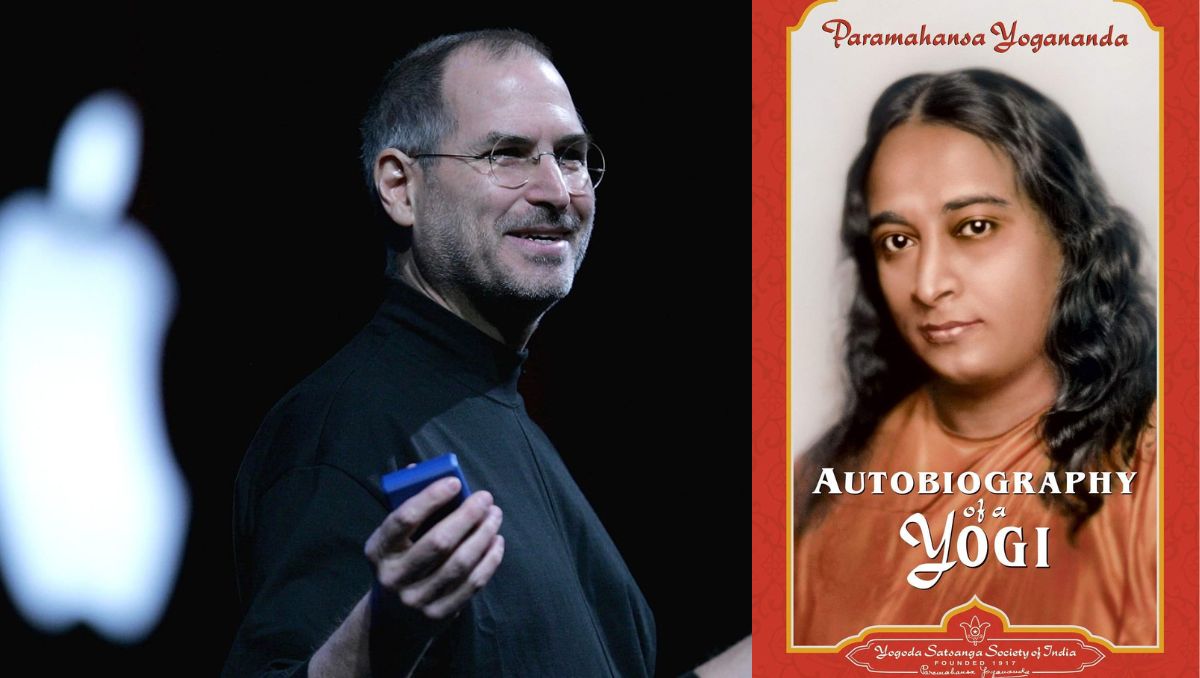
Five Timeless Ideas from Autobiography of a Yogi That Shaped Steve Jobs and Helped Build Apple’s $4 Trillion Empire
Introduction:
When Spiritual Wisdom Meets Silicon Valley
In the modern history of technology, few stories are as compelling as the spiritual roots behind material success. Steve Jobs, the visionary co-founder of Apple Inc., openly acknowledged that Paramahansa Yogananda’s Autobiography of a Yogi was one of the most influential books of his life. In fact, it was the only book Jobs downloaded onto his iPad—and he gifted it to attendees at his funeral.
At first glance, a mystical yogi’s autobiography and a trillion-dollar tech empire may seem worlds apart. Yet, beneath Apple’s sleek devices lies a philosophy deeply aligned with ancient spiritual principles. These five ideas from Autobiography of a Yogi quietly shaped Jobs’ mindset—and, in turn, Apple’s destiny.
1. Intuition Is a Higher Intelligence Than Logic
Yogananda repeatedly emphasizes that intuition is the soul’s direct perception of truth, transcending rational thought. He presents intuition as a refined inner faculty developed through self-discipline and awareness.
Steve Jobs echoed this belief throughout his life. He famously said:
“Intuition is a very powerful thing—more powerful than intellect.”
Apple’s most iconic innovations—from the iPhone to the MacBook—were not born from market research alone but from deep inner conviction. Jobs trusted what felt right, even when logic or data suggested otherwise. This intuitive leadership allowed Apple to create products customers didn’t yet know they needed.
Spiritual takeaway:
True creativity arises when intuition leads and intellect follows.
2. Simplicity Is a Spiritual Discipline
In Autobiography of a Yogi, simplicity is not mere minimalism—it is portrayed as clarity of consciousness. Saints and yogis live simply to eliminate distractions that cloud awareness.
Steve Jobs transformed this spiritual ideal into a design philosophy. Apple’s obsession with simplicity—clean interfaces, minimal buttons, elegant packaging—mirrors the yogic principle that truth reveals itself best when clutter disappears.
Behind Apple’s external simplicity was an intense inner discipline. Jobs demanded perfection, believing that removing the unnecessary was a sacred act.
Spiritual takeaway:
Simplicity is not subtraction—it is refinement of essence.
3. Mastery Requires Inner Discipline, Not Comfort
Yogananda’s spiritual journey is marked by austere discipline, patience, and surrender. Enlightenment, the book teaches, does not arise from comfort but from inner mastery.
Steve Jobs lived this principle unapologetically. He was known for his demanding nature—not just toward others, but toward himself. Jobs practiced fasting, meditation, and deep focus. He rejected comfort zones, both personally and professionally.
Apple’s long-term success was built not on short-term pleasure but on delayed gratification and relentless standards.
Spiritual takeaway:
Excellence is born where discipline replaces convenience.
4. Reality Is Shaped by Consciousness
One of Yogananda’s most radical teachings is that the material world is influenced by consciousness. Thought, intention, and belief shape reality more profoundly than external circumstances.
Steve Jobs embodied this metaphysical insight in business form. His “reality distortion field”—often misunderstood—was rooted in the belief that vision can bend possibility. He believed that if one’s consciousness was clear and focused, even the impossible could be achieved.
Apple didn’t follow trends—it created them.
Spiritual takeaway:
When consciousness expands, reality reorganizes itself.
5. Purpose Is Greater Than Profit
At its core, Autobiography of a Yogi is a reminder that life’s highest goal is self-realization, not material accumulation. Wealth, fame, and power are secondary to purpose.
Steve Jobs never viewed Apple merely as a profit-making machine. He saw it as a tool to merge technology with human consciousness, art, and meaning. This purpose-driven approach attracted not just customers, but believers.
Ironically, it was this spiritual detachment from money that helped Apple become the world’s most valuable company—crossing the historic $4 trillion valuation.
Spiritual takeaway:
When purpose leads, abundance follows.
Conclusion:
A Yogi’s Wisdom Behind a Tech Giant
Steve Jobs’ life proves a timeless truth taught by Paramahansa Yogananda: inner transformation precedes outer success. Apple’s rise was not merely a technological revolution—it was a spiritual philosophy expressed through silicon and glass.
In a world obsessed with speed, profit, and competition, Autobiography of a Yogi reminds us—and Steve Jobs showed us—that the deepest innovations arise from stillness, awareness, and inner alignment.
Perhaps the future of humanity’s greatest creations will not emerge from smarter machines—but from more awakened minds.

 Sets New Benchmarks in Global Cosmetic Education and Women Empowerment](https://worldnow.co.in/wp-content/uploads/2026/05/FB_IMG_1779691614478-120x86.jpg)