















 Sets New Benchmarks in Global Cosmetic Education and Women Empowerment](https://worldnow.co.in/wp-content/uploads/2026/05/FB_IMG_1779691614478-360x180.jpg)




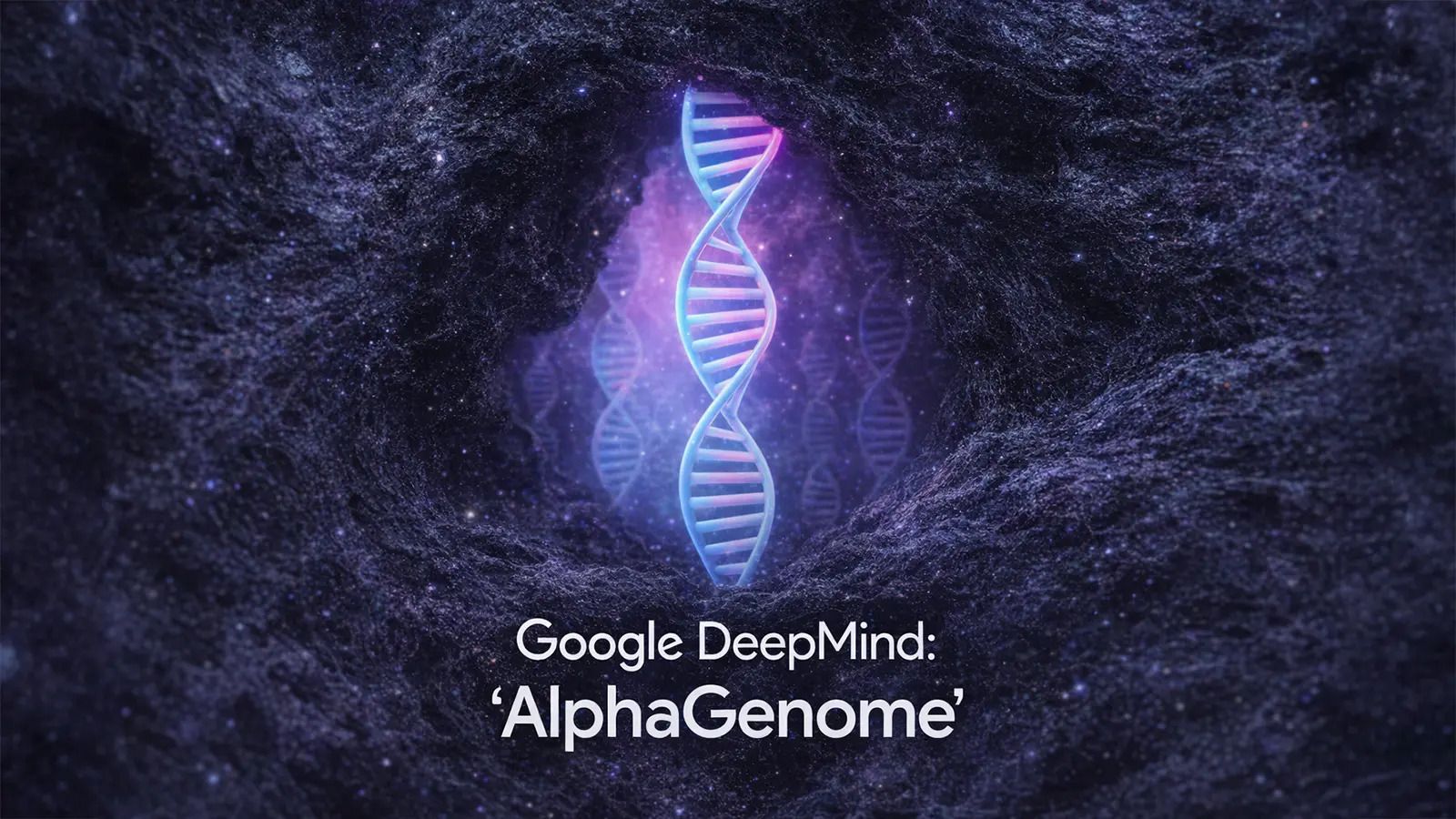
Google DeepMind’s AlphaGenome: A Breakthrough AI to Decode Human DNA and Predict Disease Risk
WorldNow.co | By Founding Editor Samaran
LONDON / CHENNAI, February 1, 2026 — Google DeepMind has unveiled AlphaGenome, a groundbreaking artificial intelligence (AI) model designed to transform how scientists interpret the human genome and identify genetic causes of disease. The announcement marks a major advance in computational genomics, with potential implications for precision medicine, disease research, and biological discovery worldwide.
AlphaGenome is a large-scale deep-learning system capable of analyzing stretches of DNA up to one million base pairs at a time, offering predictive insight into how genetic variations alter biological function. The model excels at interpreting complex sections of the genome — including the vast non-coding “dark matter” that regulates gene activity and has long eluded researchers.
Unlike traditional models that focus mainly on protein-coding regions, AlphaGenome uses advanced neural network architectures to generate predictions across thousands of functional genomic signals — such as gene expression, RNA splicing, chromatin accessibility, and molecular structure — with single-base precision. This unified approach outperforming prior specialized tools can help pinpoint which mutations may drive disease processes.
According to DeepMind researchers, AlphaGenome’s development was first described in a peer-reviewed study published in Nature and later rolled out with public access via an API. The tool is now being used by research teams in over 160 countries.
“We see AlphaGenome as a tool for understanding what the functional elements in the genome do,” said DeepMind scientist Natasha Latysheva during a press briefing, “which we hope will accelerate our fundamental understanding of the code of life.”
Accelerating Genomic Research and Disease Discovery
DeepMind’s new model addresses one of the most persistent challenges in genetics: connecting raw DNA sequences to biological outcomes. With more than 98% of the genome non-coding and its functional roles largely unknown, researchers previously needed multiple specialized tools to interpret different genomic features. AlphaGenome brings these capabilities into a single, scalable AI that can rapidly evaluate how changes in DNA affect disease risk.
Scientists say the model could accelerate research into cancer, heart disease, autoimmune disorders, and neuropsychiatric conditions by identifying regulatory mutations that influence when and how genes are activated. Early users are already integrating AlphaGenome into studies seeking to understand complex genetic mechanisms and guide the development of targeted gene therapies.
Challenges and Future Directions
Despite its promise, AlphaGenome is not without limitations. Experts caution that insights from AI predictions still require experimental validation in laboratory settings, particularly for clinical use. Furthermore, the model’s performance beyond its one-megabase scope and across diverse species remains an area of ongoing investigation.
Nevertheless, AlphaGenome’s release represents a notable milestone — a shift towards AI-driven genome interpretation that could reshape genetic research and personalized medicine in the coming decade.
 Sets New Benchmarks in Global Cosmetic Education and Women Empowerment](https://worldnow.co.in/wp-content/uploads/2026/05/FB_IMG_1779691614478-350x250.jpg)