















 Sets New Benchmarks in Global Cosmetic Education and Women Empowerment](https://worldnow.co.in/wp-content/uploads/2026/05/FB_IMG_1779691614478-360x180.jpg)



Native Stingless Bees Become the World’s First Insects to Receive Legal Rights
By Samaran
Founding Editor, WorldNow.Co.In
Peruvian Amazon:
In a historic milestone for global conservation, native stingless bees of the Peruvian Amazon have officially become the first insects in the world to be granted legal rights. The landmark recognition, formalized in October and December 2025, acknowledges these ancient pollinators as beings with inherent rights — setting a powerful precedent for environmental law and biodiversity protection worldwide.
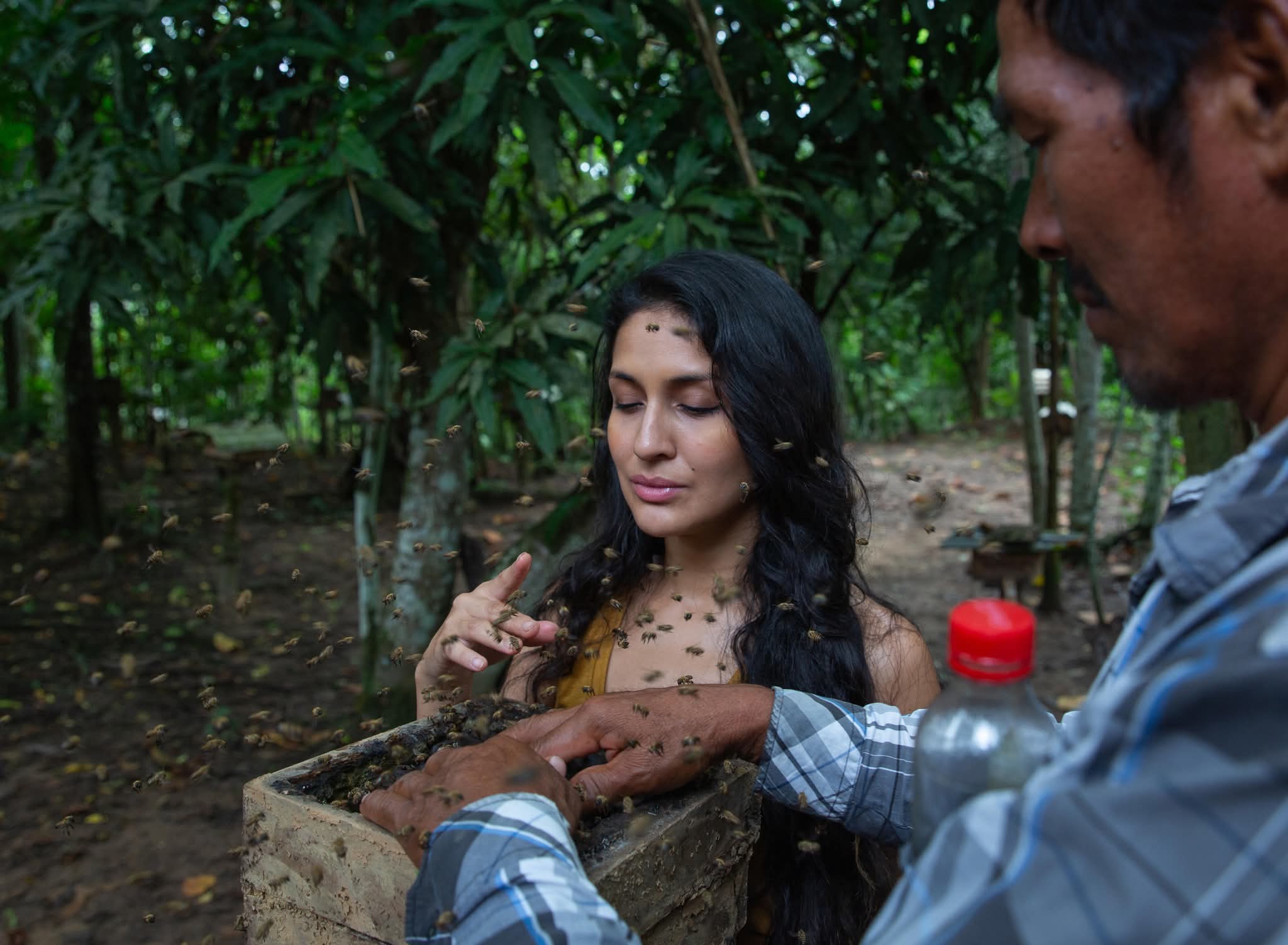
The breakthrough emerged from years of research led by chemical biologist and National Geographic Explorer Rosa Vásquez Espinoza, whose work focuses on medicinal honey and Indigenous knowledge systems. While studying the healing properties of honey in the Amazon rainforest, Vásquez Espinoza and her team discovered hundreds of stingless bees living within hollow trees — a finding that underscored both their ecological importance and their vulnerability.
What followed was an unprecedented collaboration. Indigenous leaders, environmental lawyers, scientists and conservationists joined forces, combining modern scientific research with ancestral wisdom passed down through generations. Together, they built the legal and ecological case that ultimately led to the world’s first formal protection of an insect species.
Stingless bees are among the oldest bee species on Earth, with a lineage stretching back millions of years. Despite lacking stingers, their role in the ecosystem is formidable. Scientists estimate that these bees are responsible for pollinating more than 80 percent of Amazonian flora, including economically vital crops such as coffee, cacao (chocolate), avocados and blueberries. Their decline would pose a direct threat not only to rainforest biodiversity but also to global food systems.
By recognizing stingless bees as rights-bearing entities, the new legal framework goes beyond traditional wildlife protection. It affirms their right to exist, thrive and fulfill their ecological role, while placing obligations on governments and industries to prevent habitat destruction and exploitation.
“This shows how modern science and ancestral wisdom can come together to create real conservation solutions,” Vásquez Espinoza said, highlighting the importance of Indigenous stewardship in safeguarding biodiversity.
Environmental experts say the decision could inspire similar legal recognitions for other non-human species, especially in biodiversity-rich regions facing intense pressure from deforestation, mining and climate change. More broadly, it challenges long-held assumptions about humanity’s relationship with nature — shifting from ownership and exploitation toward coexistence and responsibility.
As the Amazon continues to stand at the center of the global climate and conservation debate, the recognition of stingless bees’ legal rights marks a small insect making a giant impact — not only for the rainforest, but for the future of environmental justice worldwide.

 Sets New Benchmarks in Global Cosmetic Education and Women Empowerment](https://worldnow.co.in/wp-content/uploads/2026/05/FB_IMG_1779691614478-120x86.jpg)