








 Sets New Benchmarks in Global Cosmetic Education and Women Empowerment](https://worldnow.co.in/wp-content/uploads/2026/05/FB_IMG_1779691614478-360x180.jpg)

Putin’s India Visit Revives Talk of His Unusual Security Protocols – And He’s Not Alone
By Founding Editor Samaran
New Delhi, December 4, 2025
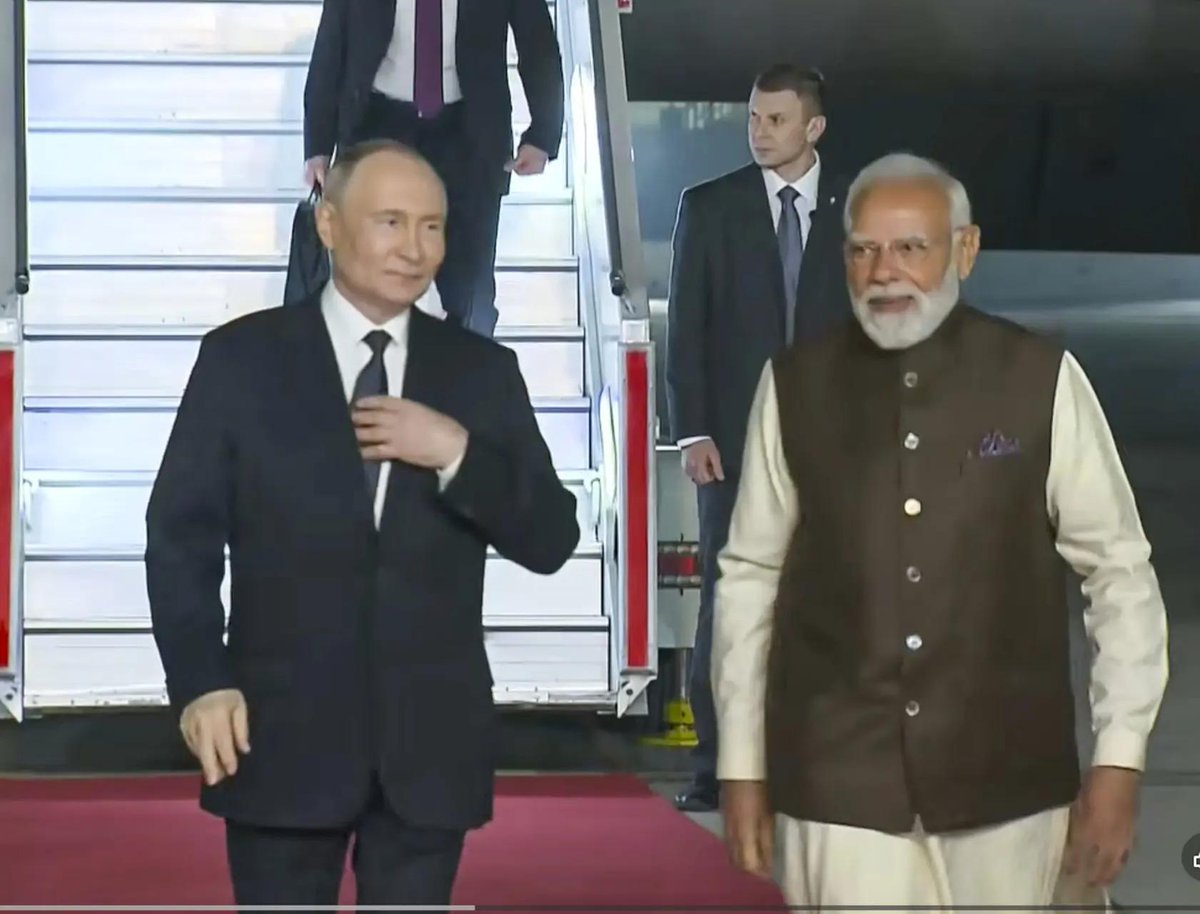
Russian President Vladimir Putin arrived in New Delhi on Thursday for the 23rd India-Russia Annual Summit, a high-profile two-day visit hosted by Prime Minister Narendra Modi. While discussions on defense cooperation, trade, energy, and strategic partnership dominate the official agenda, online chatter has once again turned to one of the more unusual elements of Putin’s overseas travel: the reported practice of collecting and transporting his biological waste back to Moscow.
The protocol, first widely publicised during Putin’s 2017 visits to France and other countries, is intended to prevent foreign intelligence services from obtaining samples that could reveal details about the Russian leader’s health. Though never officially confirmed by the Kremlin, the measure has been documented by French media outlets and security observers over the years.
Putin is far from the only world leader to employ highly specific and sometimes eccentric security measures. In an age of sophisticated espionage, assassination risks, and cyber threats, such protocols have become standard for many heads of state.
A Global Tradition of Extreme Precautions
– Russia’s Federal Protective Service (FSO) deploys extensive advance teams, food-tasters, mobile laboratories to test meals, and armored Aurus limousines for Putin. Bodyguards undergo rigorous vetting, and encrypted communication systems replace standard mobile phones during foreign trips.
– Turkey’s President Recep Tayyip Erdoğan travels with a large security detail that has, on occasion, clashed with protesters abroad. Overseas visits can involve thousands of personnel.
– China’s Xi Jinping is protected by the secretive Central Security Bureau, which conducts thorough electronic sweeps of hotels and meeting venues.
– U.S. Presidents benefit from Secret Service operations that include airspace restrictions, K-9 units, and counter-sniper teams. Recent reports have highlighted how even fitness-tracking apps used by protection details can inadvertently reveal sensitive locations.
– Japanese leaders, past and present, have required massive deployments for international travel, a reflection of both domestic and geopolitical risks.
Security experts note that these measures, while sometimes appearing excessive to the public, are rooted in real historical threats—poisonings, assassination attempts, and intelligence operations—that have targeted leaders across the decades.
Focus Remains on Substance of the Summit
Indian authorities have coordinated closely with Russian counterparts to ensure comprehensive security in the national capital, including NSG commandos, anti-drone systems, and route sanitisation. Officials emphasise that such arrangements are routine for VIP visits of this magnitude.
Friday’s schedule includes restricted talks at Hyderabad House, delegation-level discussions, the laying of a wreath at Raj Ghat, and a state banquet. Key outcomes are expected in areas such as nuclear energy cooperation, defence manufacturing, and trade diversification.
While the lighter anecdotes about leader security continue to circulate online, they serve as a reminder of the complex realities behind high-level diplomacy. For India and Russia, both long-standing strategic partners, the visit underscores an enduring relationship that has weathered global turbulence for over seven decades.
Samaran is the Founding Editor of WorldNow.co.in
WorldNow.co.in | Bridging Borders, Breaking Narratives
 Sets New Benchmarks in Global Cosmetic Education and Women Empowerment](https://worldnow.co.in/wp-content/uploads/2026/05/FB_IMG_1779691614478-120x86.jpg)