









 Sets New Benchmarks in Global Cosmetic Education and Women Empowerment](https://worldnow.co.in/wp-content/uploads/2026/05/FB_IMG_1779691614478-360x180.jpg)

India-Russia Strategic Partnership Thrives Amid Global Turbulence in Modi-Putin Era
By Samaran, Founding Editor
WorldNow.co.in
New Delhi | December 4, 2025
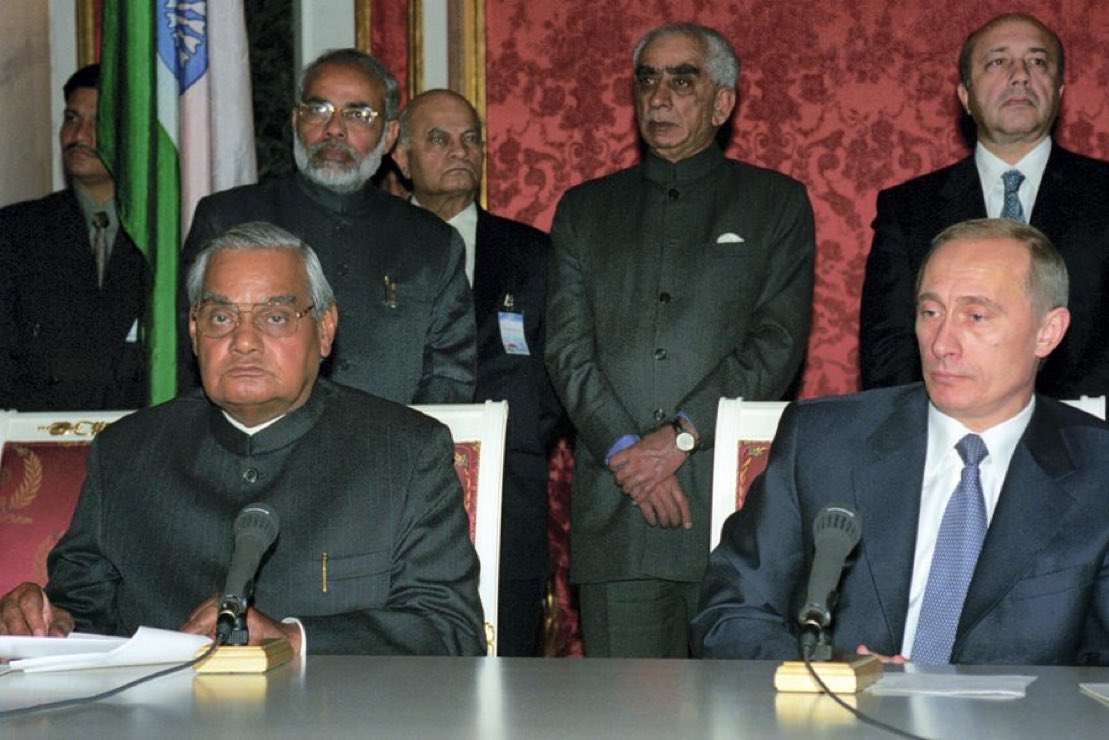
Under the leadership of Prime Minister Narendra Modi and President Vladimir Putin, the India-Russia strategic partnership has not only maintained its historical continuity but has significantly expanded in scope and depth, even as the world navigates one of its most challenging geopolitical phases in decades.
The 22nd India-Russia Annual Summit held in July 2025 in Moscow underscored this resilience. Despite intense Western pressure on New Delhi to distance itself from Moscow following the Ukraine conflict, India doubled down on its time-tested relationship, elevating bilateral ties to a “Special and Privileged Strategic Partnership” status that now includes ambitious targets of $100 billion in bilateral trade by 2030 and joint investments worth $50 billion.
Defying sanctions and supply-chain disruptions, India has emerged as one of the largest buyers of Russian crude oil, with imports rising from less than 1 percent of India’s total oil imports before 2022 to nearly 40 percent in 2025. This energy cooperation has been critical in keeping India’s inflation in check while providing Russia with a reliable market amid Western embargoes.
Beyond energy, the partnership has expanded into new frontiers. The two nations have fast-tracked the Chennai-Vladivostok Eastern Maritime Corridor, operationalised the International North-South Transport Corridor (INSTC), and deepened defence co-production under the “Make in India” framework. Licensed production of AK-203 rifles in Uttar Pradesh, joint development of BrahMos-II hypersonic missiles, and long-term contracts for S-400 air defence systems highlight a defence relationship that remains unparalleled in trust and technology transfer.
Nuclear energy cooperation has also gathered pace with Russia committing to build six additional 1,200 MW reactors at Kudankulam, taking the total to twelve units – making it one of the largest nuclear power parks in the world.
In the Arctic, Indian companies are investing in Russian liquefied natural gas (LNG) projects, while Rosneft and Indian public-sector firms have expanded joint ventures in Siberia. Trade in national currencies has crossed 50 percent of bilateral transactions, reducing dependency on the US dollar and shielding commerce from external financial pressures.
At the strategic level, India and Russia have aligned positions on key multilateral platforms, including the SCO, BRICS, and the UN Security Council, where Russia continues to back India’s bid for permanent membership.
Analysts point out that the Modi-Putin personal chemistry – evident in the rare “informal summit” tradition and the exchange of prestigious civilian honours (Order of St. Andrew for PM Modi in 2019 and Order of the Holy Apostle Andrew the First-Called returned in kind) – has translated into policy continuity irrespective of global headwinds.
“India refused to view its relationship with Russia through the prism of any third country,” a senior Indian official told WorldNow on condition of anonymity. “This partnership is rooted in mutual strategic autonomy and long-term national interest.”
As the world splits into competing blocs, the India-Russia axis stands out as a rare example of a major non-Western power maintaining an independent foreign policy while deepening ties with Moscow. In an era of geopolitical uncertainty, the Modi-Putin partnership has proven to be not just enduring – but expanding.
 Sets New Benchmarks in Global Cosmetic Education and Women Empowerment](https://worldnow.co.in/wp-content/uploads/2026/05/FB_IMG_1779691614478-120x86.jpg)