














 Sets New Benchmarks in Global Cosmetic Education and Women Empowerment](https://worldnow.co.in/wp-content/uploads/2026/05/FB_IMG_1779691614478-360x180.jpg)



Decoding the Human Puzzle: How AI Makes Sense of Our Behavior
By Samaran, Founding Editor
October 14, 2025
In an era where technology seems to know us better than we know ourselves, artificial intelligence (AI) has emerged as a master interpreter of human behavior. From predicting our shopping habits to detecting emotions in a fleeting glance, AI is reshaping how we understand ourselves. But beneath the surface of this digital wizardry lies a question: how does AI actually decipher the messy, unpredictable patterns of human action?
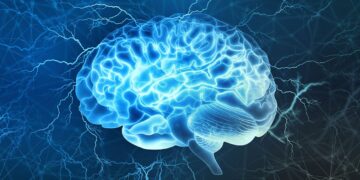
At its core, AI’s ability to “read” human behavior comes down to data—mountains of it. Machine learning models, often powered by sprawling neural networks, are fed vast datasets of text, speech, facial expressions, or even biometric signals. These models churn through the noise to spot patterns, connecting the dots between what we say, how we move, and what we might do next. Take natural language processing (NLP), for instance: it dissects the words we type or speak, picking up on sentiment or intent. Ever wonder why your social media feed seems to know you’re feeling down? That’s NLP parsing your posts for subtle cues. Meanwhile, computer vision systems scrutinize facial twitches or eye movements to gauge emotions, sometimes with eerie precision.
Then there’s reinforcement learning, where AI mimics human trial-and-error to predict decisions. It’s the tech behind those uncanny streaming recommendations or the split-second calculations of self-driving cars. By mapping inputs—like a furrowed brow or a hesitant click—to behavioral outcomes, AI builds a statistical scaffold of human tendencies.
But let’s be clear: AI doesn’t *understand* us the way a friend might over coffee. It’s not sentient, nor does it feel. It’s a number-cruncher, brilliant but cold, approximating human behavior through probabilities. As Dr. Priya Anand, a cognitive scientist at MIT, told me, “AI is like a mirror reflecting patterns in our data, not a mind grasping our motives.” This distinction matters. AI can misstep when faced with cultural nuances or ambiguous emotions its datasets haven’t captured. A smile in one culture might signal joy; in another, it’s politeness masking discomfort. If the training data leans too heavily on one demographic—say, Western urbanites—the AI’s “insights” can skew, sometimes disastrously.
Bias is the elephant in the room. A 2024 report from the Global AI Ethics Consortium revealed that 58% of emotion-recognition tools falter when analyzing non-Western faces or languages. This isn’t just a technical glitch; it’s a reminder that AI’s lens is only as broad as the data it’s given. And when it reduces complex human motivations to neat algorithms, it risks oversimplifying the chaos of who we are.
Still, the possibilities are staggering. AI is already spotting early signs of Alzheimer’s in speech patterns, tailoring education to a student’s mood, or flagging risky behavior in crowds. But with great power comes great responsibility. Ethical concerns—privacy, fairness, the potential for misuse—loom large. As AI gets better at decoding us, we must ask: who controls the code, and what do they do with the insights?
In the end, AI’s grasp of human behavior is a marvel of engineering, but it’s no crystal ball. It’s a tool, not a sage, offering glimpses of our actions through a data-driven lens. The challenge now is ensuring that lens is clear, fair, and respects the beautiful complexity of being human.
Samaran is the Founding Editor of World Now , covering technology’s intersection with humanity.
 Sets New Benchmarks in Global Cosmetic Education and Women Empowerment](https://worldnow.co.in/wp-content/uploads/2026/05/FB_IMG_1779691614478-350x250.jpg)