










 Sets New Benchmarks in Global Cosmetic Education and Women Empowerment](https://worldnow.co.in/wp-content/uploads/2026/05/FB_IMG_1779691614478-360x180.jpg)



Nepal’s Youth-Led Uprising: Protests Over Social Media Ban and Corruption Claim 22 Lives, Force Prime Minister’s Resignation
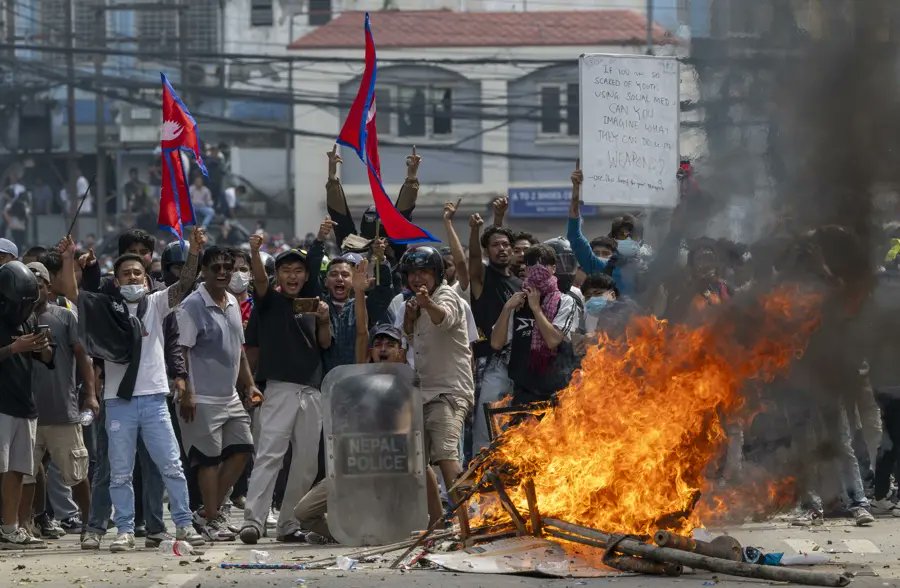
Kathmandu, Nepal– At least 22 people die and hundreds more sustain injuries as youth-led protests escalate into widespread violence across Nepal, marking the deadliest unrest in the Himalayan nation since its 2006 peace accord. The demonstrations, initially sparked by a government ban on major social media platforms, have morphed into a broader revolt against entrenched corruption and political nepotism, culminating in the resignation of Prime Minister K.P. Sharma Oli on Tuesday.
The chaos unfolds amid an indefinite curfew in Kathmandu and other cities, with armed soldiers patrolling deserted streets and guarding key sites like Parliament. Protesters, predominantly from Generation Z – young Nepalis aged 13 to 28 – have stormed government buildings, set fire to the Parliament complex and the homes of senior politicians, and clashed fiercely with security forces. The United Nations has condemned the violence, calling for a “prompt and transparent investigation” into the deaths, while urging restraint to prevent further escalation.
Spark of the Unrest: Social Media Ban Ignites Broader Fury
The immediate trigger was the government’s abrupt shutdown of over 20 social media platforms, including Facebook, Instagram, WhatsApp, YouTube, X (formerly Twitter), and TikTok, on September 4. Authorities justified the move as a measure to curb “fake news, hate speech, and cybercrimes” after the platforms failed to register under new regulations from the Ministry of Communications and Information Technology. With about 90% of Nepal’s 30 million people relying on the internet for news, business, and social connections, the ban – which lasted just days – was widely viewed as an assault on free speech and a tool to silence growing anti-corruption sentiment.
Protests erupted on Monday, September 8, as thousands of young demonstrators converged on Kathmandu’s Parliament, demanding the ban’s reversal and accountability for alleged graft. “This isn’t just about social media – it’s about trust, corruption, and a generation that refuses to stay silent,” read an editorial in The Kathmandu Post, capturing the mood of the “Gen Z movement.” Videos circulating online showed protesters, many teenagers and college students, chanting “Stop the ban on social media. Stop corruption, not social media!” as they faced off against riot police.
Security forces responded with tear gas, rubber bullets, water cannons, and – according to Amnesty International and eyewitness accounts – live ammunition. At least 19 deaths occurred on the first day, with 17 in Kathmandu alone, including young protesters shot while attempting to breach barbed-wire barriers. Two more fatalities were reported in eastern Sunsari district. Over 400 people, including more than 100 officers, were injured in clashes that spread to cities like Biratnagar, Bharatpur, and Pokhara.
By Tuesday, the government lifted the ban following an emergency cabinet meeting, but the damage was done. Protesters defied the curfew, torching the Singha Durbar government complex, the Supreme Court, and residences of figures like President Ram Chandra Paudel, Home Minister Ramesh Lekhak, and opposition leader Sher Bahadur Deuba. Local media reported ministers being airlifted to safety by military helicopters as mobs attacked. Tribhuvan International Airport shut down due to nearby fires, stranding travelers and canceling flights.
A Generation’s Revolt Against Systemic Failures
Beneath the social media flashpoint lies deep-seated frustration with Nepal’s political elite. High-profile corruption scandals, including embezzlement in infrastructure projects and opaque public spending, have eroded public trust. Social media amplified outrage over “nepo kids” – the children of politicians flaunting luxury lifestyles amid widespread poverty, with Nepal’s per capita income hovering at $1,300 annually. Unemployment and economic inequality force millions of young Nepalis abroad for work, fueling resentment toward a system perceived as captured by a few families.
“This is the protest by the new generation in Nepal,” one demonstrator told Reuters, highlighting the role of digital natives who grew up with smartphones and global trends but face unfulfilled promises of prosperity post-2006. The civil war, which killed over 17,000 and ended with the Maoist insurgency’s integration into mainstream politics, ushered in democracy but also chronic instability. Since 2008, when the monarchy was abolished and Nepal became a federal republic, the country has cycled through 14 prime ministers – none completing a full term. Frequent coalition collapses, often driven by power struggles between parties like Oli’s Communist Party of Nepal (Unified Marxist-Leninist) and the Nepali Congress, have paralyzed governance.
Oli, 73, assumed office for a fourth term in July 2024 via a power-sharing deal with the Nepali Congress, but his coalition unraveled under protest pressure. In his resignation letter to President Paudel, Oli cited the “adverse situation” and called for a “constitutional solution.” Four cabinet ministers, including Lekhak, had already quit on “moral grounds.” President Paudel has invited Gen Z leaders for talks, while the army appeals for calm and warns of intervention if violence persists.
International Concerns and Regional Ripples
The United Nations Human Rights Chief Volker Türk expressed shock at the “escalating violence,” pleading with security forces to avoid further bloodshed and praising Nepal’s post-conflict democratic progress. UN Resident Coordinator Hanaa Singer-Hamdy described the events as “so unlike Nepal,” noting the trauma on staff who have never witnessed such unrest. Neighboring India, home to many Nepali migrants, is “closely monitoring” the situation, with Prime Minister Narendra Modi calling the violence “heart-wrenching” and urging normalcy. Border districts in Uttar Pradesh and Bihar report disruptions, including silent markets and travel advisories for Indians in Nepal.
As troops secure Kathmandu on Wednesday, the power vacuum raises fears of prolonged instability. Analysts warn that without addressing root causes – from judicial reforms to economic opportunities – Nepal risks deeper division. “The world has admired Nepal’s emergence from conflict to become a peaceful democracy,” Türk said. “All stakeholders must find a way forward to continue on that path.”
The protests, now a symbol of generational defiance, underscore a pivotal moment: Will Nepal’s leaders heed the youth, or will the cycle of upheaval persist?